Our services have earned the trust of companies, schools, and organizations globally, and we remain dedicated to maintaining that trust.
What Are Monoacylglycerols and Why Quantify Them?
Monoacylglycerols sit at the junction of three separate research fields, so a single measurement rarely answers the whole question. In digestion they are the absorbed end product of lipase action. In signaling they include 2-arachidonoylglycerol, an endocannabinoid synthesized and degraded within minutes. In product chemistry they are the surface-active species that determines how an emulsifier behaves. They are also the least stable acylglycerols, because an unsaturated MAG at the sn-2 position rearranges toward sn-1 and can hydrolyze during storage.
Monoacylglycerol Analysis Services in Creative Proteomics
The routes below answer different parts of the MAG question. They can be combined within one project, and the choice between them is usually decided by whether acyl position has to survive the analysis.
MAG Species Profiling by Acyl Chain
Quantify individual MAG species across the C14:0 to C22:6 range in biological samples, edible oils, emulsifier preparations, and formulated products. Results are reported per species with the calibration basis stated, rather than as a single total MAG figure.
1-MAG versus 2-MAG Regio-isomer Resolution
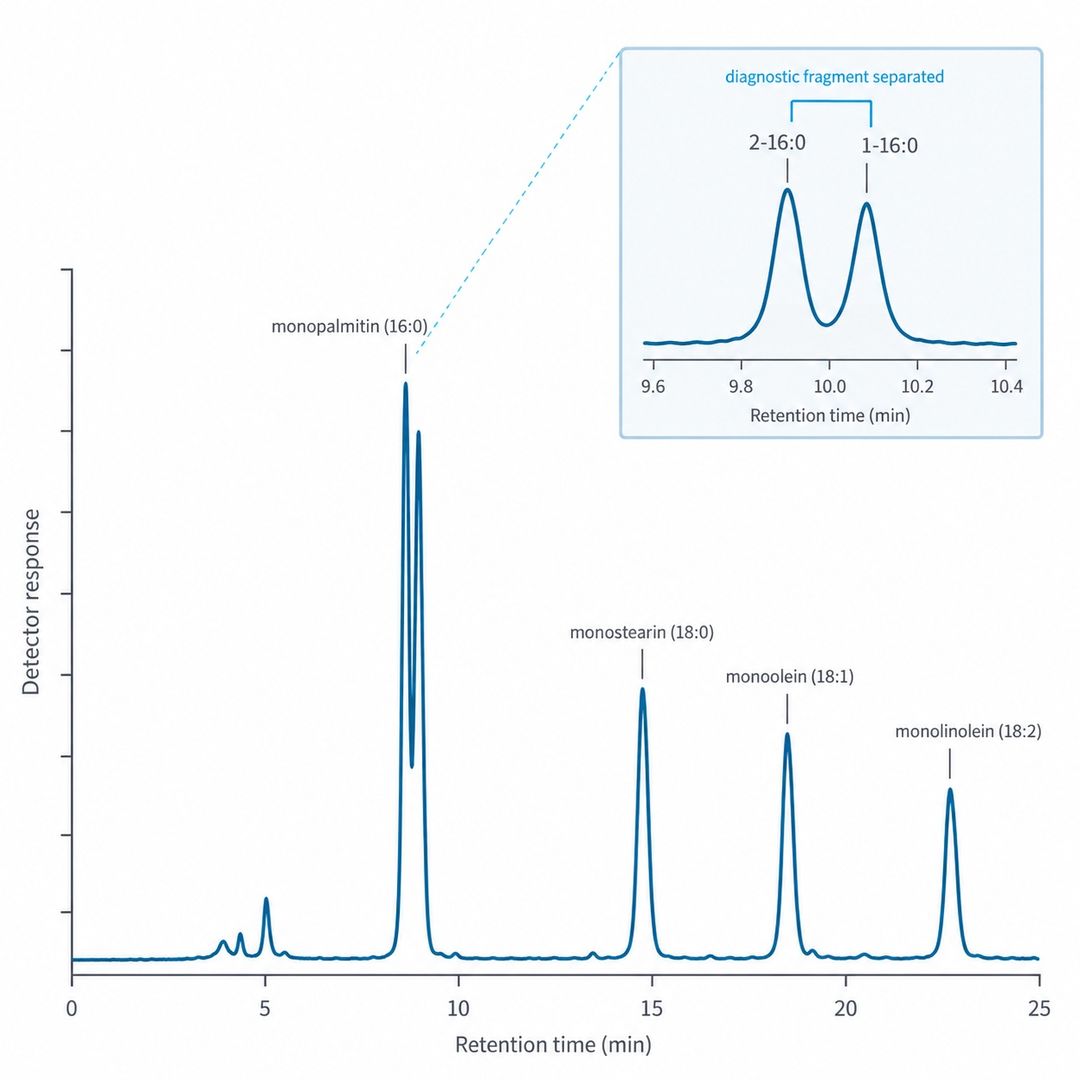
Determine whether the acyl chain occupies the sn-1 or sn-3 position, or the sn-2 position, using derivatization that preserves the original acyl location together with the diagnostic fragment ions that separate the two forms. This is the analysis that a conventional fatty acid profile cannot provide.
2-Arachidonoylglycerol and Signaling MAGs
Targeted measurement of 2-arachidonoylglycerol and related signaling monoacylglycerols in tissue and biofluid, reported as the sn-2 species with the corresponding 1-MAG quantified separately so that isomerization during handling can be assessed rather than assumed absent.
Emulsifier Lipid Class Composition
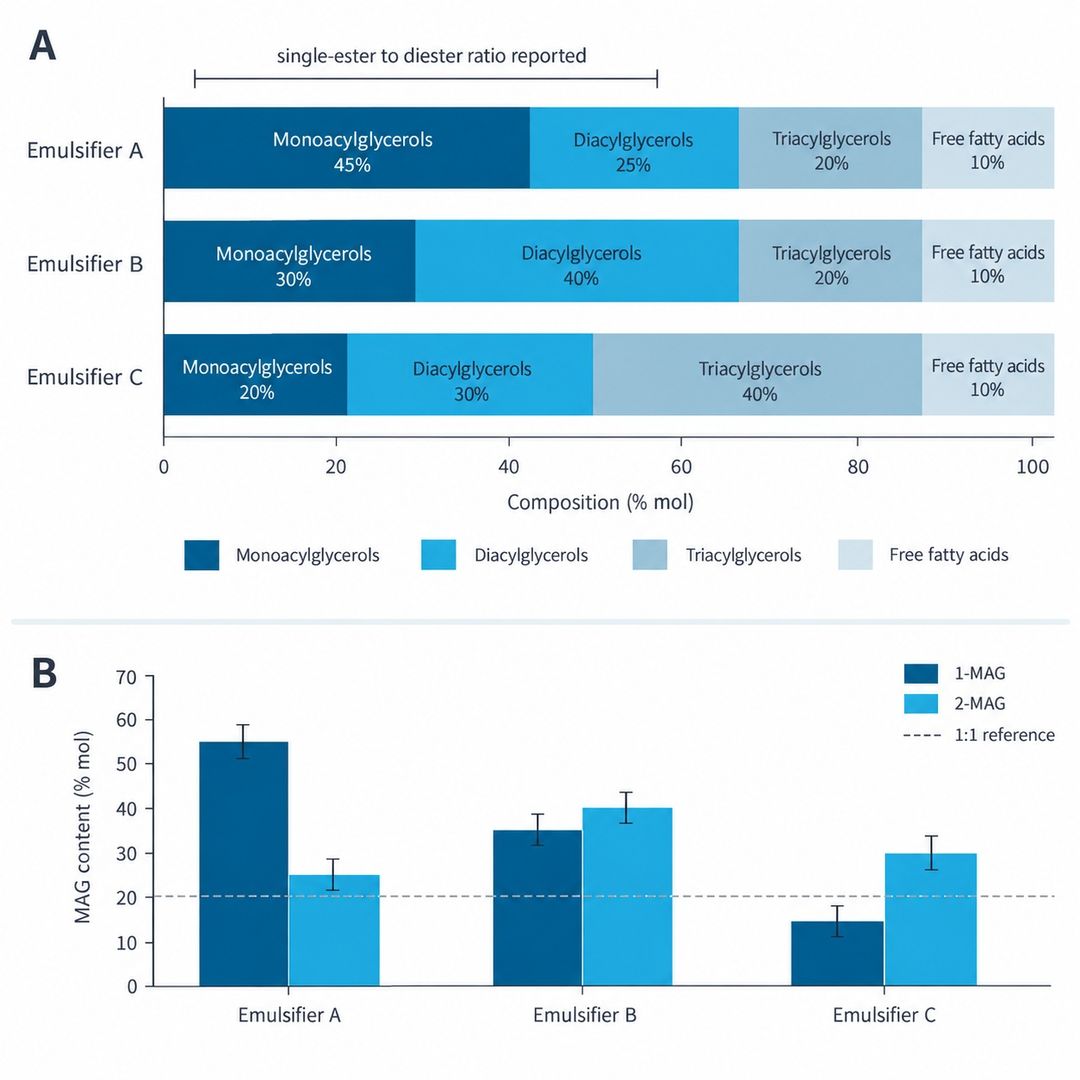
MAG, DAG, TAG, and free fatty acid content measured together in mono- and diglyceride emulsifier preparations, reported as mass fraction per lipid class alongside the single-ester to diester ratio that defines this additive type.
Lipase Hydrolysis and Digestion Products
Track how a triacylglycerol substrate is converted to DAG and MAG during enzymatic hydrolysis, with the positional distribution of the released species retained. Used in digestive lipase studies and in work on structured lipids.
Stability-Aware Handling for Labile MAGs
Collection, quenching, and storage protocols designed for a lipid class that both isomerizes and hydrolyzes, including isomerization checks on matched aliquots so that a change measured between groups can be distinguished from one introduced after collection.
Detectable MAG Species and Emulsifier Lipid Classes
Monoacylglycerol analysis spans two rather different sample worlds: biological matrices where the species and their acyl position carry the meaning, and emulsifier preparations where the lipid class distribution carries it. The tables below list what is covered in each case.
- MAG Species
- Emulsifier Classes
- Reported Values
Monoacylglycerol Species Covered by Acyl Chain
Species are reported under the naming convention 1-acyl-glycerol and 2-acyl-glycerol, so that the acyl chain and its position are both explicit in the result table.
| Common Name |
Acyl Chain |
Typical Matrices |
Why It Is Measured |
| Monomyristin |
14:0 |
Dairy fat, emulsifier preparations |
Shortest chain routinely reported in emulsifier-class work |
| Monopalmitin |
16:0 |
Plasma, tissue, emulsifier preparations, structured lipids |
Common reference species and the classical model compound for regio-isomer method development |
| Monostearin |
18:0 |
Emulsifier preparations, bakery and confectionery ingredients, cosmetic bases |
Principal saturated monoester in glycerol monostearate preparations |
| Monoolein |
18:1 |
Digestion studies, intestinal contents, plasma, oils |
Observed in the liquid-crystalline phase relevant to fat absorption |
| Monolinolein |
18:2 |
Intestinal contents, lipoprotein fractions, seed oils |
Major unsaturated MAG released from dietary triacylglycerol |
| Monolinolenin |
18:3 |
Marine and plant oils, emulsifier preparations |
Unsaturated species used to follow isomerization behavior |
| Monoarachidonin |
20:4 |
Brain, liver, tissue homogenate |
Reported alongside 2-arachidonoylglycerol rather than in place of it |
| Monodocosahexaenoin |
22:6 |
Marine oils, retinal and neural tissue |
Long-chain polyunsaturated species with the highest susceptibility to rearrangement |
Where the study calls for the whole neutral lipid picture rather than the MAG fraction alone, the same extraction can be extended into glycerolipid analysis so that the subclass results share one preparation and one reporting basis.
Lipid Classes Reported in Mono- and Diglyceride Emulsifiers
Mono- and diglyceride emulsifiers are defined mixtures rather than single substances, and their behaviour depends on how the classes are distributed. All four classes are therefore measured in one workflow.
| Lipid Class |
Role in the Preparation |
Reporting Unit |
| Monoacylglycerols (monoesters) |
The surface-active fraction that carries most of the emulsifying function, and the class whose content is usually specified by the buyer |
Mass fraction per class, with individual species resolved where requested |
| Diacylglycerols (diesters) |
Co-surface-active fraction that contributes to the combined monoester and diester content of the preparation |
Mass fraction per class |
| Triacylglycerols |
Unreacted starting material carried through from the transesterification, and a marker of process completeness |
Mass fraction per class |
| Free fatty acids |
Hydrolysis product that shifts the functional behaviour and the oxidative stability of the preparation |
Mass fraction per class, reported as the corresponding acid |
| Free glycerol |
Unreacted glycerol remaining after esterification or transesterification |
Mass fraction, reported where the process question requires it |
Reported Values and Their Calculation Basis
Each reported value is defined by which species it contains and by the basis on which it is calculated, and both are stated in the result table.
| Reported Value |
Definition |
Calculation Basis |
| Individual MAG species |
A single 1-acyl-glycerol or 2-acyl-glycerol species identified by acyl chain and position |
Calibrated concentration or mass fraction, with the internal standard response recorded per species |
| Total MAG |
Sum of the measured monoacylglycerol species within the panel |
Summed from species values; the contributing species are listed rather than implied |
| 1-MAG to 2-MAG ratio |
Relative amount of the sn-1 and sn-3 forms compared with the sn-2 form |
Both isomers are measured in the same derivatization batch, so the ratio is not affected by differences in preparation |
| sn-2 positional share |
Proportion of the total MAG pool in which the acyl chain occupies the sn-2 position |
Calculated only when positional separation is achievable for the species concerned |
| Single-ester to diester ratio |
Monoacylglycerol content relative to diacylglycerol content in an emulsifier preparation |
Calculated from class mass fractions measured in the same run |
| Lipid class distribution |
MAG, DAG, TAG, and free fatty acid content presented as one composition table |
Mass fraction per class, with free glycerol reported separately where relevant |
The MAG, DAG, and TAG classes can also be measured as a defined set rather than class by class, which is what our diacylglycerol analysis and triglyceride analysis routes are built for; when all three are required together, that is arranged as one panel rather than three separate projects.
Resolving 1-MAG and 2-MAG Regio-isomers
The position of the acyl chain is not a detail. A 2-MAG and a 1-MAG of the same fatty acid share a molecular formula and a nominal mass, yet they play different roles: the sn-2 form is what pancreatic lipase generates in the gut lumen and what enters the monoacylglycerol signaling pathway.
They also behave differently in storage: an unsaturated 2-MAG rearranges toward sn-1 during synthesis, storage, and sample preparation, not only inside the instrument. Published work on this rearrangement reports that pure unsaturated 2-MAG reference standards are hard to obtain for the same reason, so isomer assignment cannot rest on a standard injection alone.
| Isomer |
Acyl Position |
Diagnostic Series Under Electron Ionization |
Analytical Consequence |
| 1-MAG and 3-MAG (alpha form) |
sn-1 or sn-3, on a primary hydroxyl |
Characterised by loss of the methylene(trimethylsilyl)oxonium fragment at 103 atomic mass units, followed by loss of the acyl chain |
The abundant fragment is absent from the sn-2 form, which makes the two forms separable in the mass dimension as well as in time |
| 2-MAG (beta form) |
sn-2, on the secondary hydroxyl |
Produces a diagnostic series that the alpha form does not generate, arising from cleavage across the glycerol backbone |
Allows the sn-2 form to be identified even where a reference standard of that exact species is not obtainable |
Two consequences follow for how the analysis is set up. First, a total fatty acid profile cannot answer a positional question: converting the MAG fraction to fatty acid methyl esters gives the overall acyl composition but discards where each chain originally sat. Second, when position is the objective, derivatization and chromatography are selected for it from the start rather than added afterwards. The same logic applies to any material whose acyl distribution is defined positionally, such as structured lipids and interesterified fats.
What Monoacylglycerol Analysis Is Used For
Projects arriving at this service differ in matrix, in the endpoint that matters, and in how much positional detail the conclusion depends on. Designs outside the patterns below are adapted during feasibility review.
Emulsifier and Ingredient Characterization
Establish the class distribution of a mono- and diglyceride emulsifier, follow it across production lots, or compare a supplied material against its declared composition. Because the functional behaviour of these preparations depends on the balance between classes, the composition table is usually the deliverable, with species-level detail added where a process question requires it.
Lipid Digestion and Intestinal Absorption
Follow the hydrolysis of a dietary or test triacylglycerol through its diacylglycerol and monoacylglycerol intermediates, with the position of the released acyl chains retained. This distinguishes the products that can be absorbed from those that cannot, which is the question that structured-lipid and lipase-inhibitor work turns on.
Enzyme Pathway and Metabolic Research
Measure the monoacylglycerol pool as a readout of the enzymes that produce and consume it, including the acyltransferase route that resynthesizes triacylglycerol and the lipase route that degrades monoacylglycerol. Because both routes act on positionally defined substrates, the pool is reported as isomers rather than as a total.
Endocannabinoid and Signaling Studies
Quantify 2-arachidonoylglycerol and related sn-2 monoacylglycerols in tissue and biofluid as signaling molecules that are synthesized and cleared rapidly. Reporting the corresponding 1-MAG alongside it provides an isomerization check, so that a signal attributed to enzyme activity is not an artifact of handling.
Related Signaling Routes
Where the study concerns 2-arachidonoylglycerol as a signaling molecule rather than as a lipid intermediate, the measurement is planned together with our endocannabinoid analysis, so that the monoacylglycerol and the amide-class mediators are quantified on one basis and reported in one structure.
Why Choose Our Monoacylglycerol Analysis Platform
- Position information retained: Where the acyl position matters, the MAG fraction is derivatized in a way that preserves it, so the result states whether the chain was on sn-1, sn-3, or sn-2 instead of returning a single merged value.
- Isomerization assessed rather than assumed absent: Matched aliquots are carried through the workflow so that rearrangement introduced during collection and storage can be estimated and reported, which matters for a lipid class that rearranges readily.
- Identification that does not depend on unavailable standards: The sn-2 form is assigned from its diagnostic fragmentation behaviour as well as from retention, following published practice for species whose pure standards are not obtainable.
- MAG measured in context: Monoacylglycerols are quantified alongside diacylglycerols and triacylglycerols in one preparation, so an increase in one class can be read against what happened to the others rather than in isolation.
- Reporting aligned with how these materials are specified: Emulsifier results are given as class mass fractions together with the single-ester to diester ratio, which is the form in which this additive type is described.
- Acceptance criteria stated per method: Calibration linearity, replicate agreement, and internal standard response are defined during planning for the matrix and species range concerned, and are reported with the data.
Monoacylglycerol Analysis Workflow
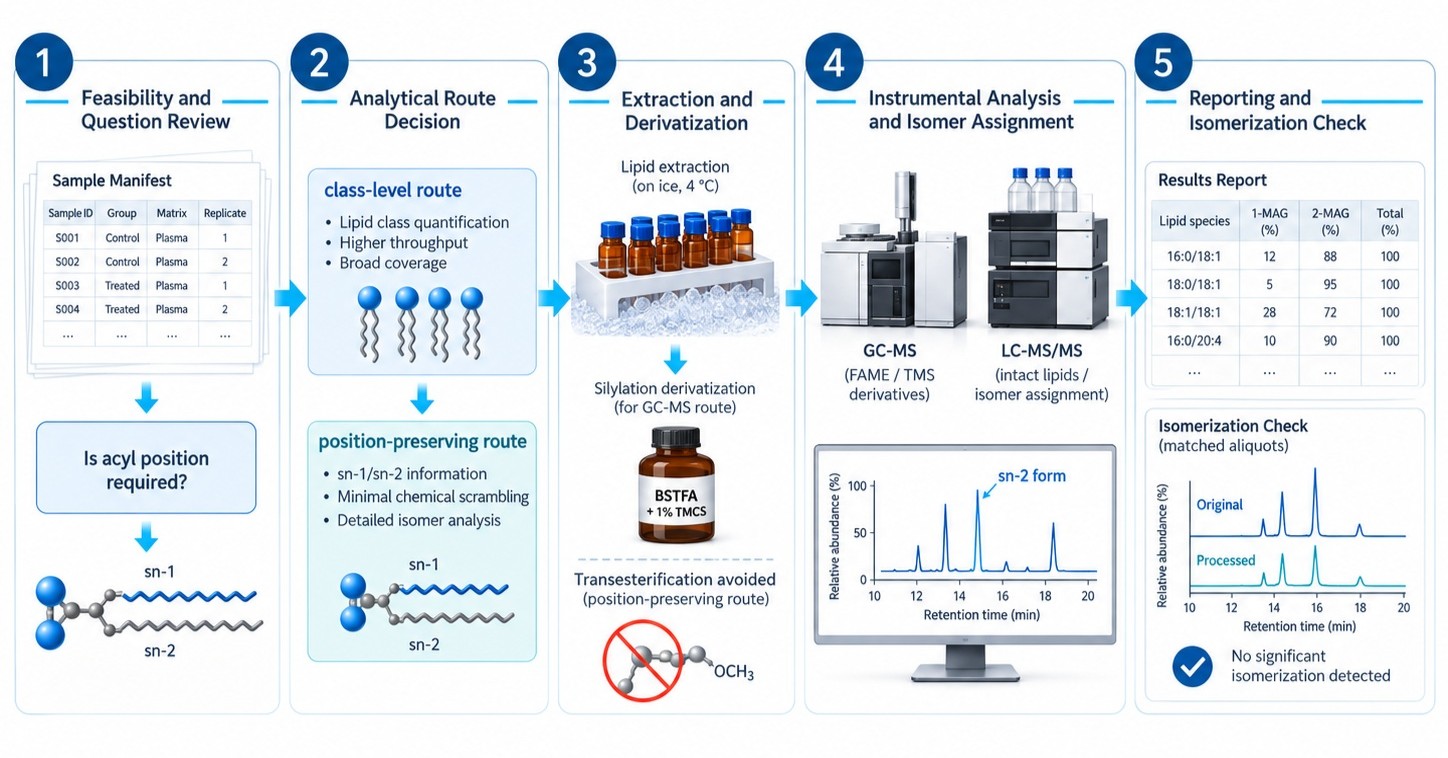 Five-step monoacylglycerol analysis workflow: feasibility and question review, decision on whether acyl position must be retained, matrix-specific extraction and derivatization, instrumental analysis with isomer assignment, and reporting with an isomerization check where relevant.
The workflow is modular, and one decision shapes most of it: whether the acyl position has to survive the analysis. A question about emulsifier composition does not require positional resolution, so it runs on a class-level route with species detail added as needed. A question about lipase products, sn-2 signaling species, or rearrangement during handling does require it, and the derivatization, chromatography, and identification strategy are then selected for position from the beginning.
Platforms Used for Monoacylglycerol Analysis
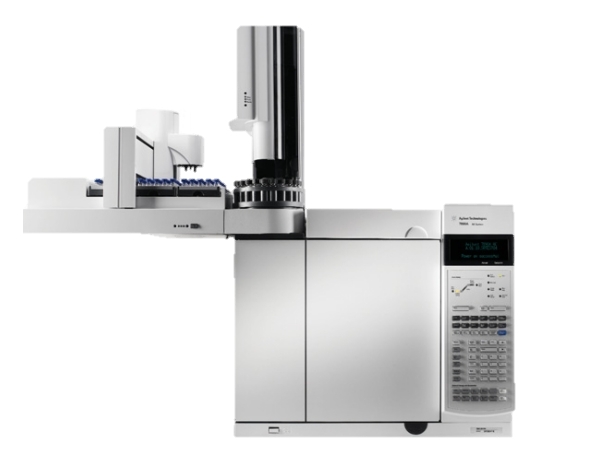
Agilent 7890A GC System (Figure from Agilent) — silylated monoacylglycerol separation with mass spectrometric detection for positional assignment
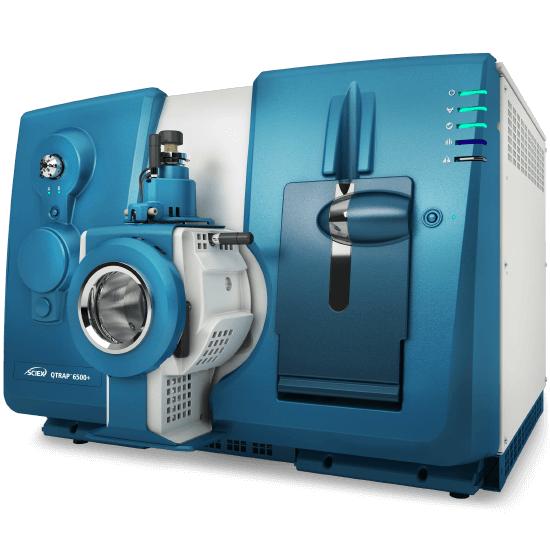
SCIEX Triple Quad 6500+ (Figure from SCIEX) — scheduled MRM for intact monoacylglycerol species and for the sn-2 signaling species
Method Specifications for Monoacylglycerol Analysis
| Parameter |
Specification |
| Derivatization for GC routes |
Trimethylsilyl ether formation from the free hydroxyl groups, chosen precisely because it leaves the acyl position intact; transesterification to fatty acid methyl esters is used only where position is not required |
| GC separation |
Non-polar or low-polarity capillary column with a programmed temperature ramp, used to separate species by acyl chain length and unsaturation before positional assignment |
| GC detection |
Mass spectrometry with electron ionization, which supplies the diagnostic fragments used to distinguish the sn-2 form from the sn-1 and sn-3 forms |
| Class-level determination |
Flame ionization detection where only the lipid class distribution of an emulsifier preparation is required |
| LC separation |
Reversed-phase C18 with gradient elution, separately optimized for intact monoacylglycerol species and for the low-abundance signaling species |
| Ionization |
Electrospray ionization in positive and negative ion mode depending on species class, with adduct formation controlled during optimization |
| Acquisition mode |
Scheduled multiple reaction monitoring with isotope-labeled internal standards assigned per analyte where such standards are available |
| Positional assignment |
Based on diagnostic fragmentation behaviour in the mass dimension together with retention order, so that species without a commercially available pure standard can still be assigned |
| Stability control |
Cold, rapid processing with minimized time between extraction and analysis; matched-aliquot isomerization checks where the comparison between groups depends on the position distribution |
| Reporting basis |
Concentration, mass fraction, percentage of lipid class, or defined ratio, with the contributing species and the denominator stated for every value |
Where the same sample is also being characterized at the level of total fatty acid composition, the class-level route is aligned with our fatty acid methyl ester analysis so that transcription of the two result sets stays consistent.
Results and Data Analysis
Monoacylglycerol Profiling Report
The core report separates species-level results, positional results where they were requested, and class-level composition into tables that share sample identifiers and units.
Key Features:
- Species-level values for each measured monoacylglycerol, with the calibration basis and the internal standard used for that species recorded
- Positional results presented as 1-MAG and 2-MAG values, or as an sn-2 share where the species concerned can be assigned
- A quality control summary covering calibration performance, blank observations, replicate agreement, and any result qualified for falling outside the calibrated range
- Method notes stating the extraction, derivatization, and chromatographic conditions actually applied, and whether the workflow was position-preserving
Raw instrument files can be discussed during project planning when they are needed for archiving or independent review.
Representative separation of silylated monoacylglycerol species, shown with the sn-2 form annotated alongside its sn-1 counterpart.
Representative class composition of a mono- and diglyceride emulsifier, with the single-ester to diester ratio reported beside the class distribution.
Emulsifier Composition Report
For emulsifier and ingredient samples the deliverable is a composition table rather than a species list, and it is built so that the result can be placed directly beside the material specification.
Key Features:
- Monoacylglycerol, diacylglycerol, triacylglycerol, and free fatty acid content as mass fractions measured in one run
- The single-ester to diester ratio calculated from those class values, with the calculation shown
- Free glycerol reported separately where the process question concerns the extent of reaction
- Lot-to-lot or supplier-to-supplier comparison presented on one table so that differences are visible without renormalising
Stability and Isomerization Check
Where a positional conclusion drives the study, the handling itself is evaluated rather than assumed to be neutral, which is the point at which many monoacylglycerol projects otherwise go wrong.
Key Features:
- Matched aliquots carried through the same workflow so that the 1-MAG to 2-MAG relationship can be compared within a sample
- Observed rearrangement reported as part of the result rather than treated as a processing detail with no bearing on interpretation
- Recommendations on collection, quenching, and storage drawn from what the aliquots actually showed
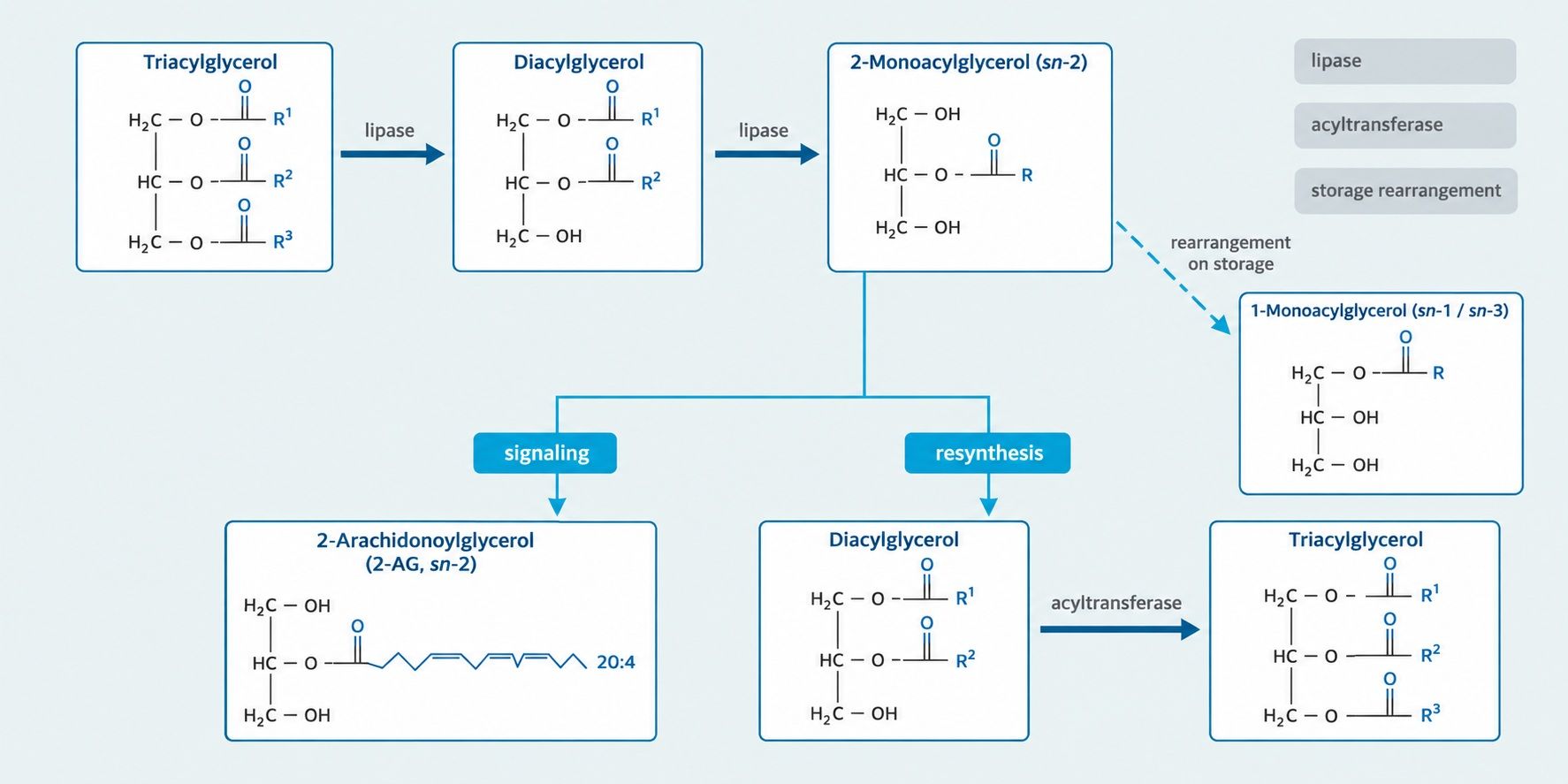 Monoacylglycerol Formation, Rearrangement, and Downstream Routes: triacylglycerol hydrolysis by lipase to diacylglycerol and monoacylglycerol, the sn-1 and sn-3 compared with the sn-2 position, rearrangement of the unsaturated sn-2 form toward the primary position, and the routes onward to triacylglycerol resynthesis and to signaling species.
When the same study also covers the wider neutral lipid landscape, the measurement can be coordinated within untargeted lipidomics profiling so that the monoacylglycerol results sit inside a broader lipid dataset collected from the same sample.
Sample Requirements for Monoacylglycerol Analysis
| Sample Type |
Collection and Handling |
Typical Starting Amount |
Planning Notes |
| Plasma or serum |
Separate promptly after collection, aliquot, and store below minus 70 degrees Celsius; freeze once and analyze without repeated thawing |
200 microliters or more for species plus positional analysis |
Monoacylglycerols sit at low concentration and move quickly, so processing delay and temperature are recorded for every sample |
| Tissue, including brain and liver |
Dissect quickly and freeze in liquid nitrogen, then hold below minus 70 degrees Celsius |
30 to 50 milligrams fresh weight |
Positional analysis of signaling species depends on how fast the tissue was frozen, so the interval between dissection and freezing is worth recording |
| Cultured cells or cell pellets |
Remove medium completely, rinse with cold buffer, and freeze the pellet immediately |
5 million cells or more |
Residual medium carries its own lipid content; cell count or protein content is needed as a normalization variable |
| Intestinal contents, digesta, or chyme |
Quench enzymatic activity immediately after collection and keep cold through processing |
50 to 200 microliters of fluid or 50 milligrams of content |
Hydrolysis continues after sampling unless it is stopped, so the quench step is defined in advance with the study design |
| Emulsifier preparations and ingredient blends |
Mix thoroughly before subsampling, since these materials can separate; store sealed and protected from heat and light |
20 to 100 milligrams |
State the form of the material, such as flake, powder, or liquid, and provide the declared composition where one exists |
| Edible oils and structured lipid preparations |
Store in sealed amber glass with minimal headspace and protect from light and heat |
50 microliters or more |
State whether the interest is in the native monoacylglycerol content or in the products formed during a defined hydrolysis experiment |
The amounts above are planning figures. Final quantities are confirmed once the species range, the matrix, and whether positional resolution is required have been settled, because a class-level emulsifier determination and a positional analysis of a signaling species do not carry the same requirement.
Frequently Asked Questions About Monoacylglycerol Analysis
Can 1-MAG and 2-MAG be distinguished?
Yes, provided the analysis is set up for it. The two forms share a molecular formula and a nominal mass, so they cannot be separated on mass alone in a single measurement. Separation is achieved in two ways: chromatographically, and through diagnostic fragmentation under electron ionization, where the sn-2 form generates a series that the primary-position form does not.
- Derivatization must preserve the acyl position, which rules out a straightforward conversion to fatty acid methyl esters
- Assignment is confirmed by fragmentation behaviour rather than by retention alone, because reference standards of the unsaturated sn-2 forms are difficult to obtain
- Where a species cannot be assigned positionally, that limitation is stated rather than filled in with an assumed value
Do monoacylglycerols change after the sample is collected?
They can, in two ways. Hydrolysis continues while the sample is warm, releasing free fatty acids and glycerol, and an unsaturated monoacylglycerol in the sn-2 position rearranges toward the primary position over time. Both processes are documented in the analytical literature on this lipid class, and both are accelerated by time and temperature.
The practical response is to quench or freeze quickly, keep samples cold through processing, avoid repeated freeze-thaw cycles, and analyze promptly. Where a positional conclusion matters, we can run matched aliquots so that the rearrangement introduced during handling is estimated and reported instead of being left to assumption.
Can MAG, DAG, and TAG be measured from one sample?
Yes, and for many questions they should be. The three classes are the successive products of the same hydrolysis and re-esterification sequence, so a change in one is usually only interpretable against the others. They are extracted together and measured within one preparation, which means the class values share a sample identity and a reporting basis rather than being assembled from separate projects.
How is 2-arachidonoylglycerol reported apart from dietary monoacylglycerol?
By acyl identity and by position together. 2-arachidonoylglycerol is the sn-2 ester of arachidonic acid, so it is identified by the combination of that acyl chain and that position, not by either alone. The result table therefore reports the species as a positional isomer and lists the corresponding 1-arachidonoylglycerol value beside it, which is what allows the two to be told apart in a sample that contains both dietary and signaling monoacylglycerols.
How is emulsifier composition reported?
As a lipid class distribution with the single-ester to diester ratio calculated from it. Monoacylglycerol, diacylglycerol, triacylglycerol, and free fatty acid content are each given as a mass fraction measured in the same run, with free glycerol reported separately where the process question requires it. Individual monoacylglycerol species can be resolved within the class when the intended use calls for that level of detail.
Is this service for clinical diagnostic use?
No. This service is for research use only. It is not intended for clinical diagnostic procedures, patient management, or treatment decisions, and no result is reported as a clinical index. Measurements intended for clinical interpretation are performed by licensed clinical laboratories. If your study involves samples that may require clinical follow-up, please indicate this during study design.
What information is needed for a quote?
Provide the matrix or product type, the number of groups and replicates, the total sample count, the species or class range of interest, and whether acyl position must be retained. Add the expected concentration range where known, the requested reporting units, the available sample amount, and the storage history of the material. Mention any hydrolysis, heating, or processing step the sample has been through, along with the comparison the data has to support.