









Client Publication: Xia, T., Wu, X., Hong, E., et al. (2023). PLoS Pathogens. DOI: 10.1371/journal.ppat.1011232
Client Profile: Research team investigating viral pathogenesis and host lipid metabolism.
Targeted Sphingolipid Quantitation for Exosome Biomarker Discovery
Analytical Challenge
Precisely quantify specific, structurally similar sphingolipids—glucosylceramide (GlcCer) and galactosylceramide (GalCer)—which are critical membrane components but challenging to separate and measure accurately with standard methods.
Our Solution & Technology
We performed targeted lipidomic analysis using SFC-MS/MS (Supercritical Fluid Chromatography-Tandem Mass Spectrometry). This advanced platform provides superior separation of lipid isomers, enabling the precise, individual quantification of GlcCer and GalCer.
Outcome & Value for Drug Delivery Research
- Exosome/LNP Relevance: Sphingolipids are essential constituents of exosome membranes and LNPs, influencing their biogenesis, stability, and cellular uptake.
- Precise Characterization: This case exemplifies our capability for targeted, quantitative analysis of key functional lipids. Such precision is vital for establishing Critical Quality Attributes (CQAs), benchmarking exosome subpopulations, or optimizing LNP lipid formulations for enhanced delivery efficiency.
- Biomarker Potential: The methodology directly supports the discovery of lipid-based biomarkers associated with vesicle function or disease state.
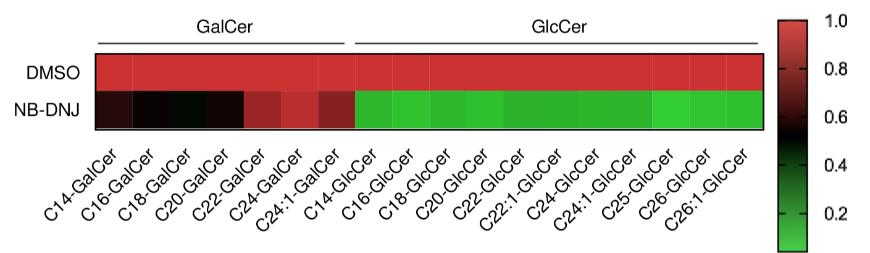
Heat map of the levels of intracellular GalCer and GlcCer in 293T cells with or without NB-DNJ treatment.
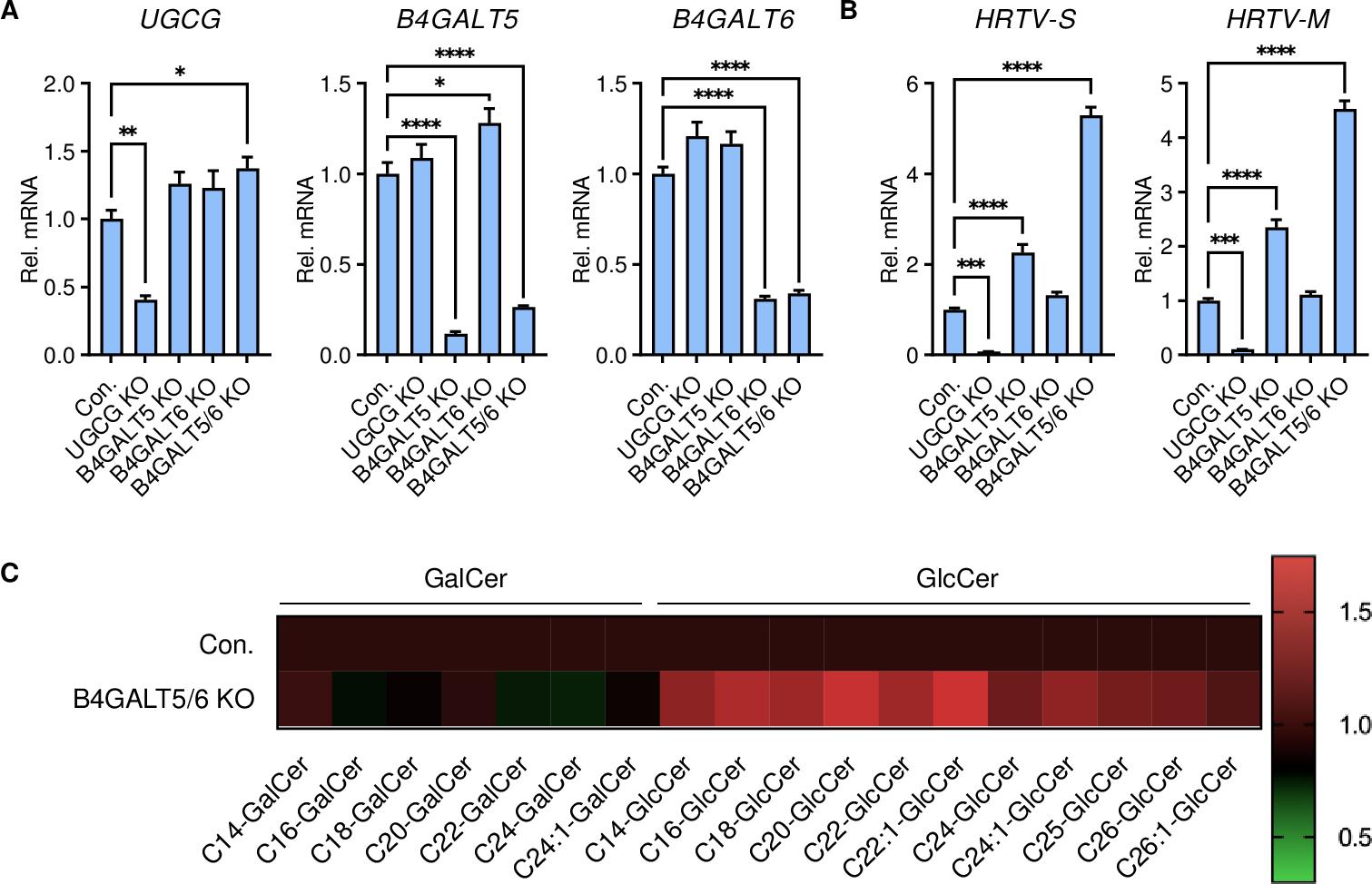
Glycosphingolipid downstream of GlcCer is not required for HRTV infection.