









Plant-Microbe Lipidomics

Plant-Microbe Lipidomics and Rhizosphere Signaling Analysis

Creative Proteomics provides high-resolution plant microbe lipidomics to decode chemical dialogues between hosts, pathogens, and symbionts. We empower researchers to transition from bulk assays to precise molecular readouts. By mapping plant-pathogen lipid interactions, we help you uncover mechanistic drivers of crop resilience and microbiome recruitment.

Key capabilities

  • Pathogen & Symbiont Profiling: Differentiate host and microbial membrane adaptations during biotrophic infection or arbuscular mycorrhizal colonization.
  • Rhizosphere Exudate Analysis: Characterize rhizosphere signaling lipids to identify novel mediators of plant-growth-promoting rhizobacteria (PGPR) recruitment.
  • Immune Cascade Quantification: Achieve absolute quantitation of jasmonates and targeted defense response oxylipin analysis to map innate immunity pathways.
Request Analysis

Submit Your Request Now

×

Our services have earned the trust of companies, schools, and organizations globally, and we remain dedicated to maintaining that trust.

Boston University
University at Buffalo
UMass Medical School
Hawaii Pacific University
Medizinische Fakultät
Louisiana State University
Nyulangone
Nature's Fynd
Dietary Supplement Manufacturer
  • Trends & Challenges
  • Integrated Solutions
  • Technical Advantages
  • Case Studies
  • FAQ

A Situational Solution Matrix for Plant-Microbe Research

Whether investigating symbiotic nutrient exchange or pathogenic membrane hijacking, select your specific research scenario below to see the recommended workflow.

Pathogen-Induced Membrane Remodeling

Broad characterization of lipid class alterations, highlighting specific host-microbe lipid metabolism dependencies.

Situation & Goal

Investigating biotrophic fungal or nematode infection where the pathogen structurally alters the host cell. The goal is to map total lipidomic shifts in the host versus the pathogen to identify membrane hijacking mechanisms.

Recommended Path: Bundle A (Discovery)
Outcome

Unbiased discovery of lipid classes that are upregulated during infection, distinguishing between host defense lipids and pathogen membrane components.

Rhizosphere Microbiome Recruitment

Identification of novel root-derived lipid signals with targeted absolute quantification of candidate recruiting molecules.

Situation & Goal

Plants secreting root exudates under environmental stress to recruit beneficial soil microbes. The goal is to characterize rhizosphere signaling lipids to isolate the exact chemoattractants driving symbiosis.

Recommended Path: Bundle A → Bundle B
Outcome

A targeted list of bioactive exudate lipids (e.g., strigolactones, lysophospholipids) validated for their role in microbiome assembly.

Innate Immunity and Oxylipin Burst

Highly sensitive, absolute concentration data essential for accurate defense response oxylipin analysis.

Situation & Goal

The host plant triggers a systemic acquired resistance (SAR) response, but the specific lipoxygenase (LOX) pathway branches are undefined. The goal is to quantify specific bursts of jasmonic acid (JA), OPDA, and related oxidative products.

Recommended Path: Bundle B (Validation)
Outcome

Precise quantitation of transient defense mediators, enabling the mapping of immune signaling cascades despite high structural lipid background.

Symbiotic Lipid Transfer Profiling

Interface-resolved datasets that prove unidirectional lipid transfer during plant-pathogen lipid interactions or symbiosis.

Situation & Goal

Studying arbuscular mycorrhizal (AM) symbiosis where the plant supplies essential fatty acids to the fungus. The goal is to profile lipid flux precisely at the periarbuscular membrane interface.

Recommended Path: Bundle A → Bundle C
Outcome

Molecular evidence of nutrient exchange, supporting models of mutualism and identification of key transporter targets.

Bacterial Effector Pathogenesis

Comparative profiles of wild-type versus effector-mutant infected tissues, pinpointing the biochemical targets of pathogenesis.

Situation & Goal

Pathogenic bacteria inject effectors that manipulate host lipid droplets to suppress immunity. The goal is to track the specific host lipid classes targeted and remodeled by bacterial effectors.

Recommended Path: Bundle A → Bundle B
Outcome

Detailed mapping of how bacterial effectors alter host organelle composition (e.g., lipid droplets) to facilitate infection.

Endophyte-Induced Systemic Resistance

A comprehensive lipid map that validates the induction of a primed defensive state by the endophyte.

Situation & Goal

Evaluating endophytic bacteria or algae for commercial biocontrol or bio-fertilizer applications. The goal is to map the systemic lipid remodeling induced in host leaves after root colonization.

Recommended Path: Bundle A (Discovery)
Outcome

Confirmation of systemic acquired resistance (SAR) or induced systemic resistance (ISR) signatures without pathogen challenge.

Selected Case Studies in Host-Pathogen Lipidomics

Client Publication: WI12 Rhg1 interacts with DELLAs and mediates soybean cyst nematode resistance through hormone pathways. Plant Biotechnology Journal, 2022. DOI: 10.1111/pbi.13709
Client Profile: Research team investigating nematode resistance mechanisms in soybeans.

Uncovering Biochemical Drivers of Nematode Resistance

Analytical Challenge

Nematodes hijack host root tissues to form feeding sites. The client needed to prove that a specific resistance gene (*Rhg1*) actively alters the host's hormonal and lipid defense signaling. Measuring these transient, ultra-low-abundance defense molecules in infected roots requires extreme sensitivity.

Our Solution & Technology

We deployed a highly sensitive Targeted LC-MS/MS workflow (Bundle B) to quantify defense-related phytohormones and lipid mediators. Our platform successfully tracked dynamic bursts of these signaling molecules across a precise infection time-course without matrix interference.

Strategic Value & Outcome
  • Mechanism Defined: Revealed that *Rhg1* interacts with DELLA proteins to reprogram hormone pathways, restricting nematode feeding.
  • Breeding Marker: Provided a definitive biochemical marker to guide the selection of resistant crop cultivars.
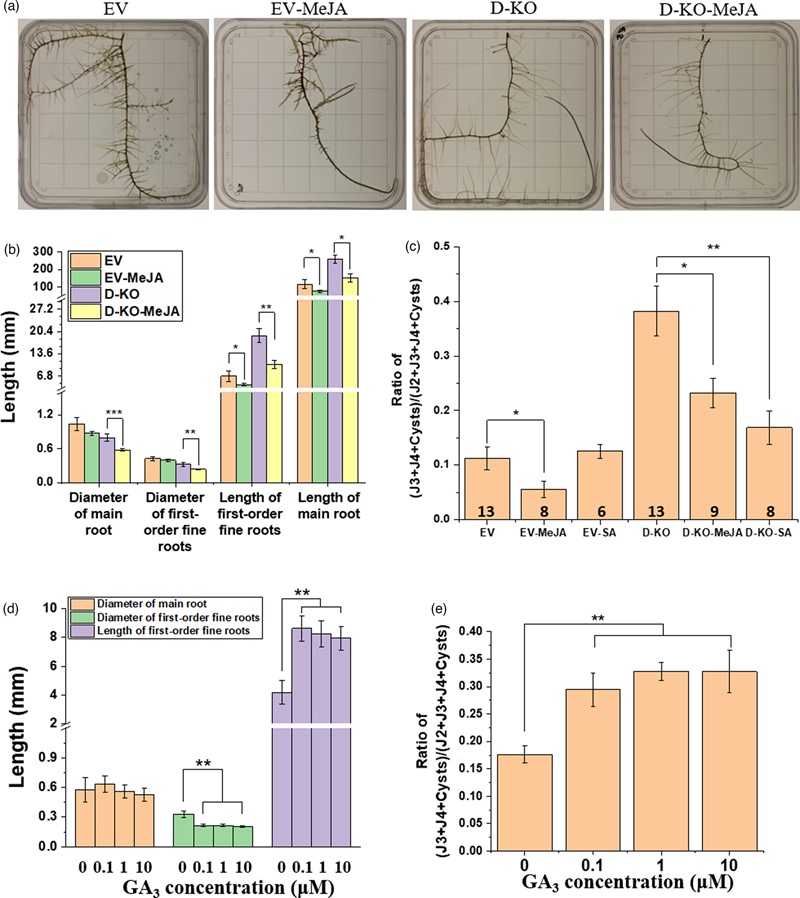
Bar graphs showing targeted defense response oxylipin analysis and hormone changes in nematode infected roots.
Hormone accumulations in roots of transgenic hairy root lines after SCN infection.
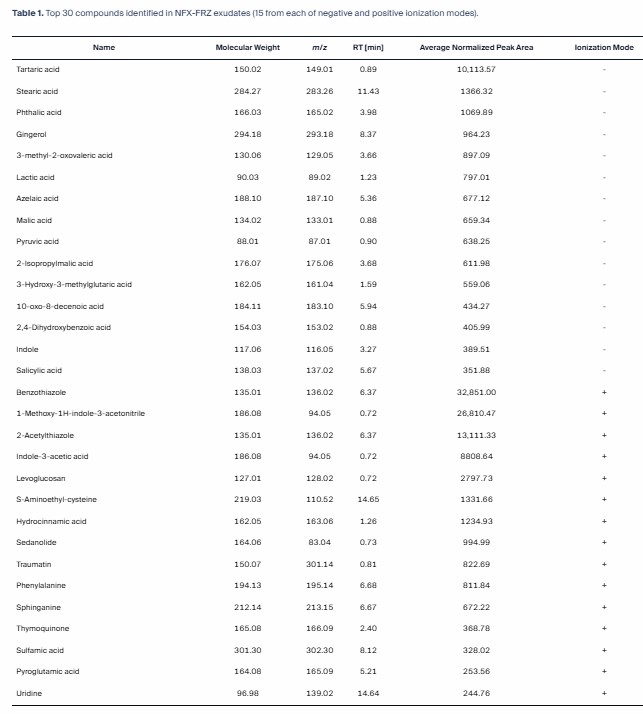
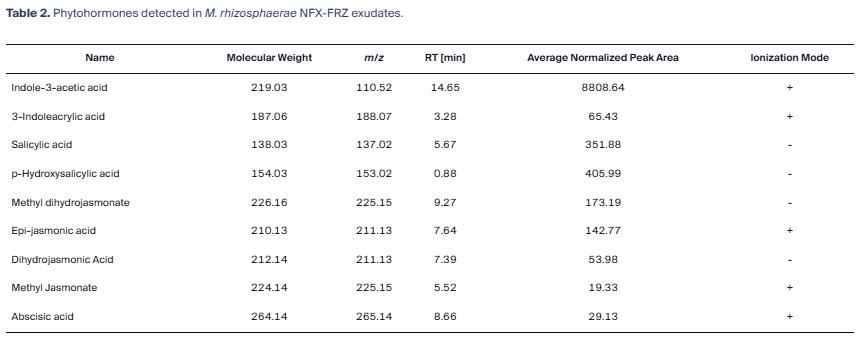
Client Publication: Plant Growth Promotion, Phytohormone Production and Genomics of the Rhizosphere-Associated Microalga. Plants, 2023. DOI: 10.3390/plants12030651
Client Profile: Developers of sustainable bio-fertilizers and biocontrol agents.

Molecular Validation of Rhizosphere Microalgae as Bio-Stimulants

Analytical Challenge

To commercialize a novel rhizosphere microalga, researchers needed to identify how it promotes plant growth. Isolating highly dilute exudates from culture media to find specific signaling lipids presents a significant sample-prep and detection challenge.

Our Solution & Technology

We paired genomic analysis with Targeted Exudate Profiling (Bundle B). Using optimized extraction protocols to concentrate culture filtrates, we used LC-MS/MS to screen for specific phytohormones and rhizosphere signaling lipids, separating active signals from background noise.

Strategic Value & Outcome
  • Proof of Mechanism: Confirmed active secretion of growth-promoting molecules (e.g., IAA), backing the symbiotic benefit.
  • Commercial Readiness: Transitioned the product from an "observational phenomenon" to a validated bio-stimulant.
LC-MS/MS chromatograms identifying rhizosphere signaling lipids and phytohormones produced by symbiotic microalgae.
Phytohormone production by M. rhizosphaerae cultivated in BG11 medium.
Client Publication: Overexpression of maize ZmLOX6 in Arabidopsis thaliana enhances damage-induced pentyl leaf volatile emissions. Journal of Experimental Botany, 2022. DOI: 10.1093/jxb/erac522
Client Profile: Crop protection team engineering pest-resistant plants.

Validating LOX-Pathway Engineering for Crop Pest Resistance

Analytical Challenge

Validating engineered plants (overexpressing LOX genes) requires mapping downstream metabolic consequences. The challenge is capturing the rapid, damage-induced "oxylipin burst" and volatile emissions immediately after wounding, before these reactive lipids degrade.

Our Solution & Technology

We executed a targeted Defense Response Oxylipin Analysis alongside VOC profiling. Utilizing rapid-quenching protocols, our LC-MS/MS platforms precisely quantified jasmonate-related metabolites in transgenic vs wild-type leaves.

Strategic Value & Outcome
  • Pathway Rewiring Confirmed: Proved that *ZmLOX6* overexpression rewired the oxylipin pathway, leading to defensive volatile emissions.
  • Pest Resistance: Demonstrated direct impairment of aphid performance, validating the gene-editing target.
Bar charts displaying LC-MS/MS quantification of defense response oxylipins in wounded plant leaves.
Oxylipin profiling of WT and ZmLOX6-overexpressing plants in response to wounding.

Frequently Asked Questions

How do you distinguish host plant lipids from pathogen lipids in infected tissue samples?
By utilizing high-resolution plant microbe lipidomics, we can identify species-specific biomarker lipids (e.g., fungal ergosterol derivatives vs. plant phytosterols). We also recommend parallel profiling of isolate microbial profiles and the uninfected host to establish precise baseline libraries for accurate deconvolution.
Can lipidomics be performed directly on root exudates to identify rhizosphere signaling lipids?
Yes. We utilize specialized extraction protocols to concentrate highly dilute hydroponic or soil-wash exudates, allowing us to profile low-abundance rhizosphere signaling lipids that mediate microbiome recruitment and plant-plant communication.
What is the minimum sample weight required for defense response oxylipin analysis in leaves?
Due to the extreme sensitivity of our targeted LC-MS/MS platforms, we typically require only 50–100 mg of fresh leaf tissue to perform robust defense response oxylipin analysis and quantify transient jasmonate bursts.
Are you able to profile highly specific symbiotic lipids, such as AM fungal-specific fatty acids?
Absolutely. We can target specific lipid signatures, such as 16:1ω5 fatty acids, which act as highly reliable markers for arbuscular mycorrhizal (AM) fungal biomass and symbiotic lipid transfer tracking.
How do you prevent the rapid ex vivo degradation of signaling lipids during plant sample collection?
We enforce strict protocols requiring flash-freezing in liquid nitrogen immediately upon harvest. During extraction, we maintain cryogenic temperatures and utilize antioxidant spikes to prevent auto-oxidation of sensitive host-microbe lipid metabolism markers.
Can untargeted lipidomics identify novel lipid classes produced by uncharacterized biocontrol bacteria?
Yes. Our high-resolution Orbitrap mass spectrometry, combined with extensive lipid fragmentation (MS/MS) libraries, excels at structural elucidation. This allows us to characterize novel lipid variants secreted by previously unstudied biocontrol agents.
What internal standards are used to ensure accurate quantification of jasmonates and oxylipins?
We spike samples with a comprehensive suite of stable isotope-labeled (deuterated or 13C) internal standards corresponding to major oxylipin classes. This corrects for matrix-induced ion suppression, ensuring absolute quantitative accuracy in complex plant extracts.
Do your bioinformatics pipelines map lipid data to known plant-pathogen interaction pathways?
Yes. Our bioinformatic deliverables include pathway enrichment analysis, mapping identified plant-pathogen lipid interactions onto recognized KEGG and MetaCyc pathways to provide clear mechanistic context for your infection models.
* Our services can only be used for research purposes and Not for clinical use.

Applications:


Online Inquiry

CONTACT US

Copyright © 2026 Creative Proteomics. All rights reserved.