Quantitative Desmosterol Measurement
Targeted LC–MS/MS quantification of desmosterol in plasma, serum, tissues, cells, and culture media.

When you only measure total cholesterol, you see the outcome but not the pathway. Desmosterol is a late cholesterol biosynthesis intermediate that often shifts earlier and more specifically than bulk cholesterol, making it a sensitive marker for sterol pathway modulation.
Creative Proteomics offers a targeted desmosterol analysis service based on LC–MS/MS sterol panels to help you:
Submit Your Request Now
×








Desmosterol is a late-stage sterol intermediate formed downstream of lanosterol and upstream of cholesterol. It differs from cholesterol by a single double bond, yet this subtle change affects membrane properties and regulatory feedback in sterol metabolism.
When desmosterol levels change, they often indicate altered cholesterol synthesis, enzyme inhibition, or compensatory shifts in the mevalonate pathway. Quantifying desmosterol alongside related sterols lets you:
For many projects, desmosterol is a more sensitive readout of pathway activity than bulk cholesterol alone.

Quantitative Desmosterol Measurement
Targeted LC–MS/MS quantification of desmosterol in plasma, serum, tissues, cells, and culture media.

Desmosterol:Cholesterol Ratio Analysis
Parallel measurement of desmosterol and cholesterol to calculate pathway-relevant ratios for biosynthesis assessment.

Late Cholesterol Biosynthesis Intermediate Panel
Combined profiling of desmosterol with lanosterol, zymosterol, lathosterol, and related sterols for pathway mapping.

Desmosterol and Oxysterol Co-Profiling
Optional inclusion of selected oxysterols to interpret desmosterol changes together with oxidative and regulatory sterols.

Integrated Desmosterol Lipidomics Modules
Embedding desmosterol readouts into broader targeted or untargeted lipidomics projects for system-level interpretation.

Custom Desmosterol Pathway Panels
Project-specific panel design focused on cholesterol biosynthesis, mevalonate branches, or sterol remodeling under genetic or pharmacological perturbation.
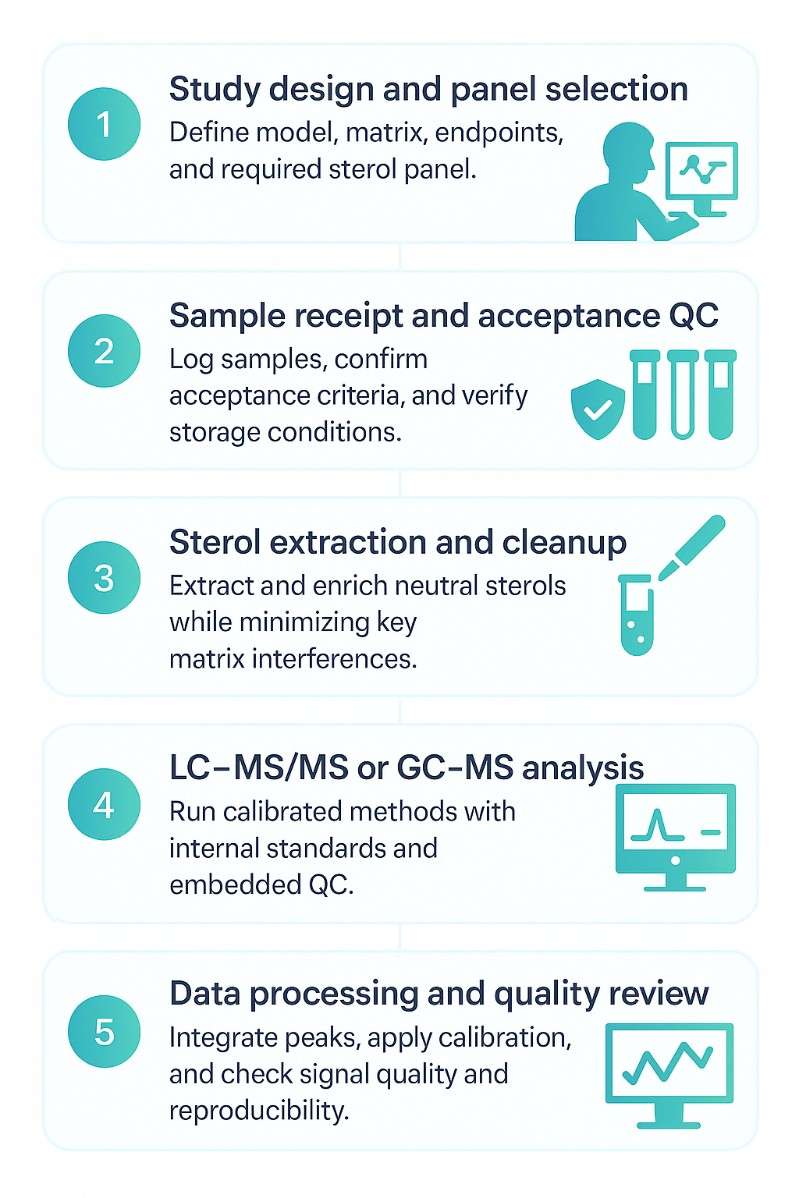
Our desmosterol assay is usually configured as a focused sterol intermediate panel. The analytes below are representative examples that are commonly included in projects. The final list can be adjusted to match your specific research needs.
| Sterol category | Representative analytes* |
|---|---|
| Key pathway intermediate | Desmosterol |
| Cholesterol endpoint | Cholesterol |
| Early sterol precursors | Lanosterol, zymosterol, lathosterol |
| Side-chain–modified sterols | 24-dehydrocholesterol, 7-dehydrocholesterol |
| Optional oxysterols | 24-hydroxycholesterol, 25-hydroxycholesterol |
| Other sterols (on request) | Selected pathway-related sterols discussed at setup |
*These are example analytes from a typical sterol intermediate panel. A full, project-specific analyte list will be confirmed during method setup and included in your study documentation.
For some projects, sterols can be derivatized and analyzed on GC systems (e.g., Agilent 7890 with a tandem MS detector) to exploit robust retention behavior and characteristic fragmentation.
| Aspect | Typical setup / benefit |
|---|---|
| Selectivity | Optimized RP gradient and MRM or HRMS MS/MS to separate closely related sterols. |
| Quantitation | Multi-point calibration curves targeting R² ≥ 0.995 for validated analytes. |
| Internal standards | Stable isotope–labeled or structurally similar sterols for signal correction. |
| Sensitivity | Practical detection from sub-ng/mL to low-ng/mL in common research matrices. |
| QC and reproducibility | Embedded QC samples and predefined acceptance limits to monitor batch quality. |
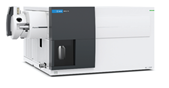
Agilent 6495C Triple Quadrupole (Figure from Agilent)
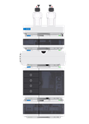
Agilent 1260 Infinity II HPLC (Fig from Agilent)
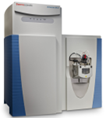
Q Exactive HF-X MS
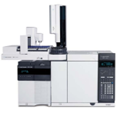
Agilent 7890B-5977A (Figure from Agilent)
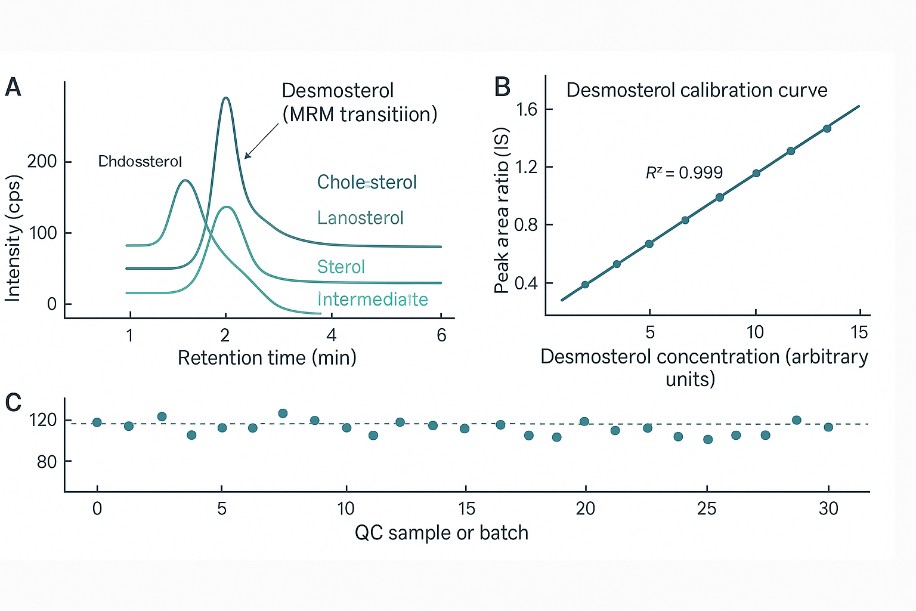
Sterol chromatograms, a linear desmosterol calibration curve, and QC results confirming selective and stable LC–MS/MS performance.
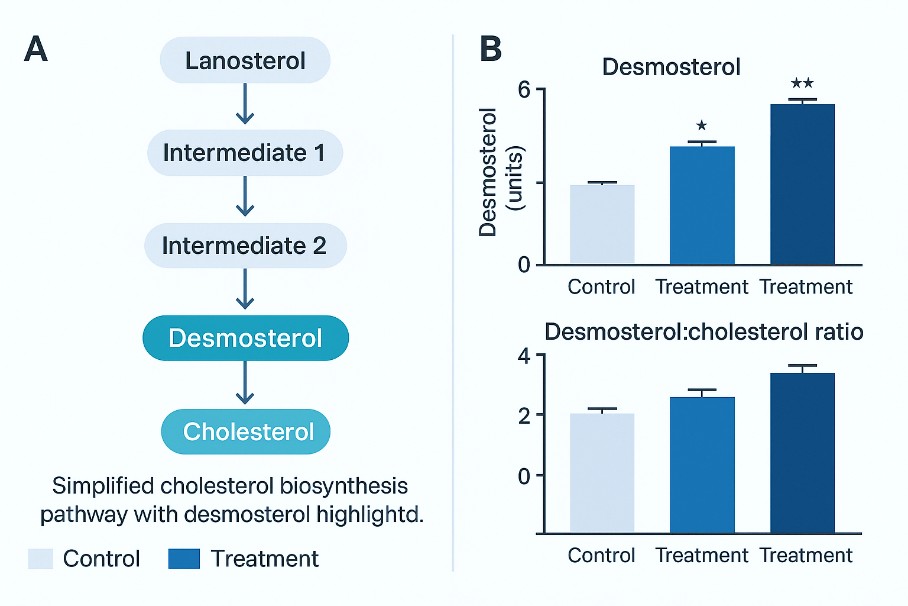
Cholesterol biosynthesis pathway highlighting desmosterol and group comparisons of desmosterol levels and desmosterol:cholesterol ratios.
Explore our Lipidomics Solutions brochure to learn more about our comprehensive lipidomics analysis platform.


Cholesterol biosynthesis research
Map flux through late cholesterol pathway steps and identify regulatory bottlenecks.

Enzyme inhibition and MoA studies
Use desmosterol and related sterols as readouts for target engagement of pathway enzymes.

Genetic models of sterol metabolism
Characterize how gene knockouts, knockdowns, or overexpression reshape sterol intermediates

Neuroscience and brain lipid studies
Profile desmosterol and sterols in brain regions to support mechanistic CNS research.

Metabolic and lipidomics studies in model systems
Integrate desmosterol into broader lipid panels to interpret pathway shifts in animal, cell, or organoid models.

Plant and microbial sterol engineering
Evaluate how pathway engineering or stress conditions alter sterol intermediates in non-mammalian systems.
| Sample type | Recommended volume / amount | Container and notes |
|---|---|---|
| Serum / plasma | 100–200 µL per sample | Screw-cap cryovials; avoid repeated freeze–thaw cycles. |
| Whole blood (EDTA) | 200–300 µL per sample | EDTA anticoagulant; gently invert to mix before freezing. |
| Cell pellets | ≥ 1 × 10⁶ cells per sample | Wash with cold PBS, remove supernatant, snap-freeze pellets. |
| Tissue (animal) | 20–50 mg per sample | Rinse if needed, blot dry, aliquot, and snap-freeze in vials. |
| Tissue (plant) | 50–100 mg fresh or frozen | Remove excess moisture; freeze quickly after collection. |
| Culture supernatant | 500–1,000 µL per sample | Clarify by centrifugation, transfer supernatant to cryovials. |
General recommendations:
If sample quantity is limited, we can often adjust extraction protocols to work with smaller inputs; please contact us before shipment.
What is desmosterol analysis used for?
Desmosterol analysis is used to study cholesterol biosynthesis and sterol metabolism. It helps you see how compounds, gene edits, or stress conditions affect late cholesterol pathway steps.
Desmosterol vs cholesterol: why not just measure cholesterol?
Total cholesterol shows the endpoint only. Desmosterol moves earlier and more specifically, so it is better for detecting pathway modulation, enzyme inhibition, and on-target effects.
Which sample types can I send for desmosterol testing?
Typical matrices include serum/plasma, animal tissues (liver, brain, adipose), cell pellets, culture supernatants, and plant or microbial samples. Samples should be frozen promptly and avoid repeated freeze–thaw cycles.
Do I need a full sterol panel or only desmosterol?
Choose a desmosterol-only assay when you mainly need a sensitive marker. Choose a sterol panel when you want to locate the pathway bottleneck or compare multiple enzymes and steps.
Can I integrate desmosterol data with lipidomics or other omics?
Yes. Results are delivered in standard formats (e.g., Excel/CSV) with clear analyte and sample IDs, making it easy to merge with lipidomics, metabolomics, transcriptomics, or proteomics data.

Services:
Online Inquiry
CONTACT US