Targeted Lathosterol Quantification
We provide accurate lathosterol quantification in serum, plasma, tissue, and cell samples using LC–MS/MS with isotope-labeled internal standards. Ideal for dose–response and time-course studies.

When cholesterol synthesis shifts, total cholesterol alone rarely tells you why. Our LC–MS/MS–based lathosterol analysis service gives you a sensitive, pathway-aware marker of cholesterol biosynthesis, so you can separate changes in synthesis from changes in absorption in one dataset.
Discuss your lathosterol project with our experts and get a study design and quotation within one workflow.
Submit Your Request Now
×








Lathosterol is a cholesterol precursor in the post-lanosterol segment of the biosynthetic pathway. It sits near the end of the Bloch pathway and reflects the activity of enzymes that convert squalene-derived intermediates into cholesterol.
Because lathosterol is not obtained directly from the diet and is formed endogenously, its concentration in plasma or tissue is commonly used as a surrogate indicator of cholesterol synthesis in vivo. When normalized to cholesterol, the lathosterol/cholesterol ratio provides a robust readout of synthetic flux that is less sensitive to short-term changes in lipoprotein levels.
In research settings, lathosterol analysis helps you:
Creative Proteomics offers precise lathosterol analysis services for cholesterol biosynthesis and lipid metabolism research. Our LC–MS/MS-based solutions deliver accurate, quantitative data tailored to your research needs.

Targeted Lathosterol Quantification
We provide accurate lathosterol quantification in serum, plasma, tissue, and cell samples using LC–MS/MS with isotope-labeled internal standards. Ideal for dose–response and time-course studies.

Lathosterol in a Sterol Lipids Panel
Quantify lathosterol alongside key sterols such as lanosterol, desmosterol, 7-dehydrocholesterol, and cholesterol. This comprehensive panel offers insights into cholesterol biosynthesis and sterol metabolism.

Lathosterol in Mevalonate Pathway Studies
Analyze lathosterol alongside mevalonic acid and other intermediates for a complete view of the mevalonate pathway and cholesterol synthesis using complementary LC–MS/MS methods.

Lathosterol Add-On for Lipidomics
Enhance your lipidomics studies with targeted lathosterol analysis, using the same samples from your serum or mammalian lipidomics work, adding focused sterol data to your profiling.
| Category | Typical analytes* | Main relevance in the panel |
|---|---|---|
| Core lathosterol markers | Lathosterol (cholest-7-en-3β-ol); 7-dehydrolathosterol (if detectable in the model) | Primary readout of endogenous cholesterol synthesis; late Kandutsch–Russell pathway node. |
| Early post-squalene sterols | Lanosterol; dihydrolanosterol; 24,25-dihydrolanosterol | Reflect activity of squalene epoxidase and lanosterol synthase; useful for locating upstream bottlenecks. |
| Mid-pathway intermediates | Zymosterol; zymostenol; cholesta-8-en-3β-ol | Help distinguish blocks at Δ8-Δ7 isomerase and related enzymes; support mechanistic interpretation. |
| Late cholesterol intermediates | Desmosterol; 7-dehydrocholesterol (7-DHC); cholesta-5,7-dien-3β-ol | Map the final steps of cholesterol biosynthesis around DHCR7 and DHCR24; important for pathway mapping and genetic models. |
| Cholesterol and related sterols | Cholesterol (total or free); cholestanol | Provide reference endpoint for lathosterol/cholesterol ratios and for distinguishing synthesis vs storage changes. |
| Phytosterol absorption markers | Campesterol; β-sitosterol; stigmasterol; brassicasterol | Research markers of intestinal sterol absorption; used with lathosterol to separate synthesis from absorption effects. |
| Cholesteryl esters (optional) | Cholesteryl palmitate (CE 16:0); cholesteryl stearate (CE 18:0); cholesteryl oleate (CE 18:1); cholesteryl linoleate (CE 18:2); cholesteryl arachidonate (CE 20:4) | Reflect storage and transport pools of cholesterol in lipoproteins and tissues; complement free cholesterol and lathosterol. |
| Oxysterols and oxygenated sterols (optional add-on) | 24S-hydroxycholesterol; 25-hydroxycholesterol; 27-hydroxycholesterol; 7α-hydroxycholesterol; 7β-hydroxycholesterol; 4β-hydroxycholesterol; 7-ketocholesterol; 24,25-epoxycholesterol | Downstream oxidative products linked to sterol turnover, signaling, and oxidative stress; useful when pathway readouts need to extend beyond neutral sterols. |
| Model-specific sterols | Ergosterol (yeast / fungi); sitostanol or campestanol (plant-rich systems); matrix-specific uncommon sterols on request | Allow alignment with non-mammalian models or specialized diets; support comparative sterol biology. |
*The final analyte list is customized according to species, matrix, expected concentration range, and study objectives.
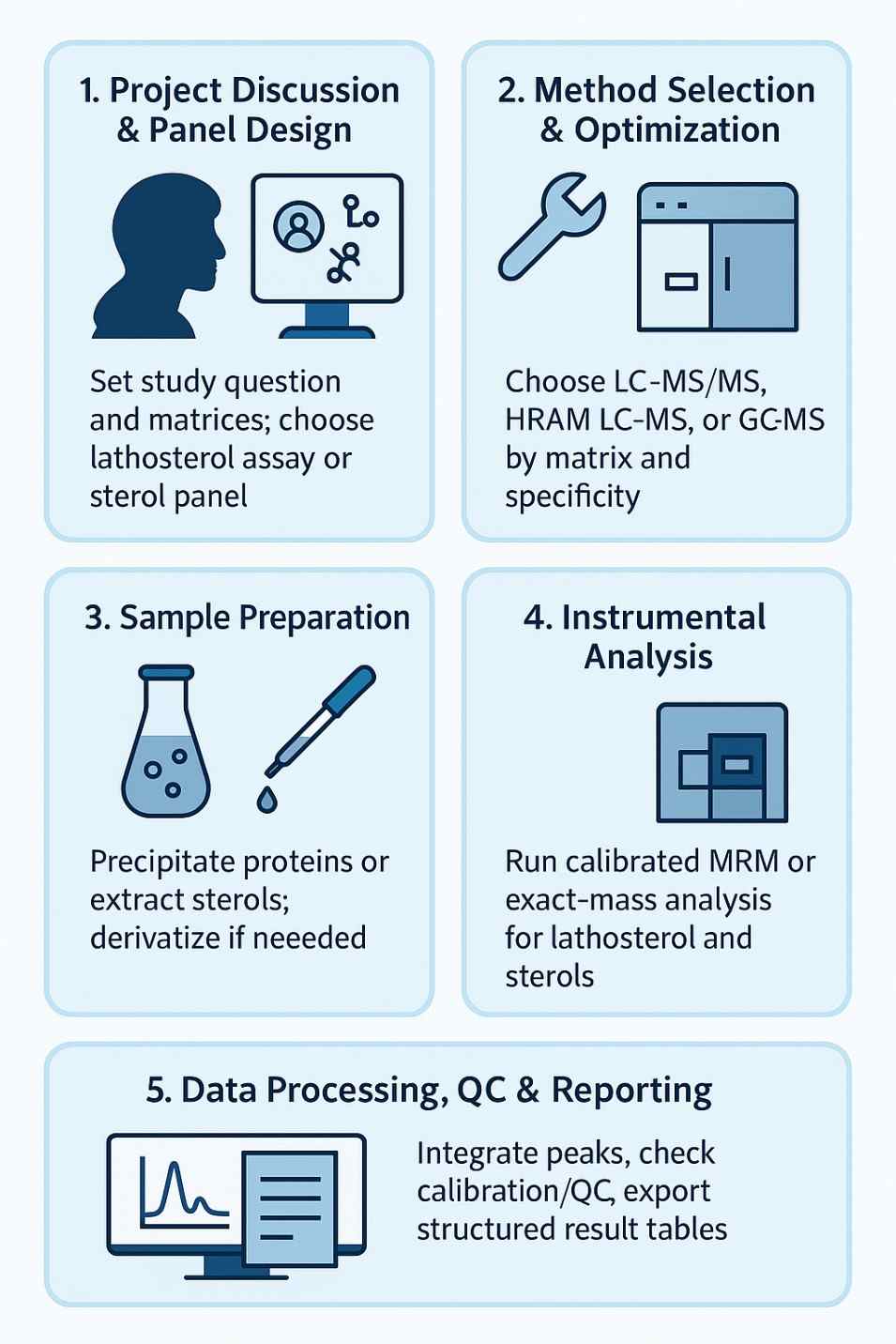
Lathosterol is structurally similar to cholesterol, which makes chromatographic separation and detection challenging on standard reversed-phase methods. To address this, our platform combines optimized chromatography with sensitive mass spectrometry.
Key technical features include:
For quantitative work, methods are typically configured with:
These settings are chosen to support linear, reproducible quantification of lathosterol and related sterols across the concentration ranges typically encountered in preclinical and translational research.
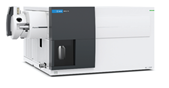
Agilent 6495C Triple Quadrupole (Figure from Agilent)
Agilent 1260 Infinity II HPLC (Fig from Agilent)
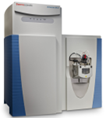
Q Exactive HF-X MS
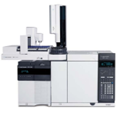
Agilent 7890B-5977A (Figure from Agilent)
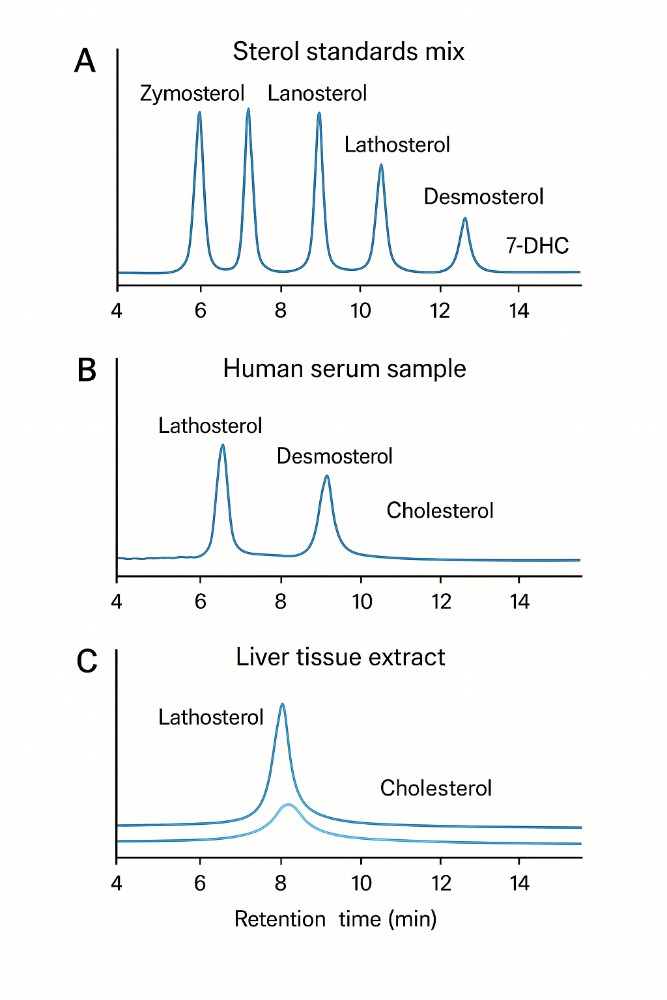
Representative LC–MS/MS chromatograms of the lathosterol-centered sterol panel.
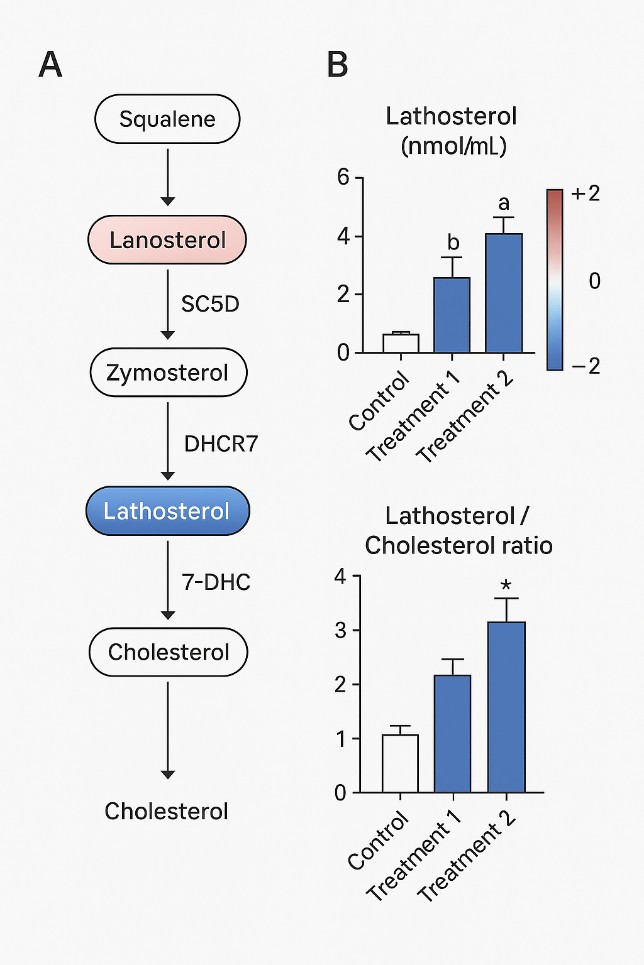
Lathosterol-centered sterol profiling in a cholesterol biosynthesis study.
For teams that prefer a more interpreted package, optional analysis modules can be added:
To keep downstream handling simple, data can be provided in several formats:
Explore our Lipidomics Solutions brochure to learn more about our comprehensive lipidomics analysis platform.


Mevalonate pathway and cholesterol biosynthesis
Track how genetic or chemical interventions reshape sterol flux and bottlenecks.

Target engagement and mechanism-of-action studies
Use lanosterol and related sterols to read out enzyme inhibition in the pathway.

Metabolic engineering and strain optimization
Tune sterol profiles in yeast, fungi, or engineered cells for improved performance.

Lipidomics and multi-omics integration
Anchor global lipidomics or metabolomics data with a defined sterol pathway node.

Membrane composition and lipid storage
Relate lanosterol changes to membrane sterol balance, lipid droplets, and storage pools.

Preclinical pharmacology and safety assessment
Examine sterol pathway responses to candidate compounds across different experimental models.
| Sample type | Recommended amount / volume | Storage and transport | Notes |
|---|---|---|---|
| Serum / plasma | ≥ 100 µL per sample | Freeze at −80 °C; ship on dry ice | Avoid repeated freeze–thaw cycles |
| Whole blood (for plasma) | Follow local collection protocol | Cool immediately; process to plasma quickly | Use anticoagulant compatible with sterol analysis |
| Tissue (e.g., liver, brain) | ≥ 50 mg wet weight | Snap-freeze; store at −80 °C; dry ice ship | Record tissue type and anatomical region |
| Cultured cells | ≥ 1×10⁶ cells per sample | Wash gently; snap-freeze cell pellets | Provide cell line, treatment, and seeding information |
| Yeast / fungal pellets | Equivalent to ≥ 20 mg wet mass | Freeze promptly; store at −80 °C | Indicate species, strain, and growth conditions |
| Microbial cultures | Cell pellet from defined volume | Freeze pellets; avoid preservatives | Discuss media components that may affect extraction |
| Plant material | ≥ 50 mg fresh or frozen tissue | Snap-freeze; keep at −80 °C | Specify tissue type and developmental stage |
| Extracts (organic phase) | ≥ 100 µL extract | Store in suitable solvent at low temperature | Provide solvent composition and extraction protocol |
If your study has strict constraints on sample volume or mass, we can adjust the method where feasible after discussing expected sensitivity and reporting needs.
What additional insight does lathosterol provide beyond total cholesterol?
Lathosterol reflects endogenous cholesterol synthesis rather than dietary intake, so lathosterol and lathosterol/cholesterol ratios can highlight pathway activation or suppression even when total cholesterol appears unchanged.
Can lathosterol analysis be combined with cholesterol absorption markers?
Yes. Lathosterol is commonly paired with plant sterols such as campesterol and sitosterol, allowing researchers to separate synthesis-driven changes from absorption-related effects in sterol metabolism studies.
Which platform should I choose: LC–MS/MS, HRAM LC–MS, or GC–MS?
LC–MS/MS is usually preferred for routine targeted sterol panels. HRAM LC–MS is useful when you need additional structural clarity or semi-targeted coverage, while GC–MS is helpful when matching legacy derivatized sterol datasets.
Is the service suitable for isotope-labeling or flux experiments?
Labeled precursors and sterol intermediates can be incorporated into lathosterol assays to support flux-style designs. Study-specific discussions are used to define labeling schemes, readouts, and sampling time points.

Services:
Online Inquiry
CONTACT US