








Aquatic Toxicology Lipidomics

Aquatic Toxicology and Ecotoxicology Lipidomics Services

Creative Proteomics provides high-resolution aquatic toxicology lipidomics to decode how environmental pollutants disrupt the physiological homeostasis of marine and freshwater organisms. We empower ecotoxicologists to transition from basic mortality assays to molecular mechanistic validation, delivering absolute quantification of lipidome shifts, oxidative stress, and endocrine disruption across fish, bivalve, and zebrafish models.

Key capabilities

  • Aquatic Food Web Profiling: Track the systemic metabolic reprogramming induced by the bioaccumulation of microplastics, heavy metals, and persistent organic pollutants (POPs).
  • Endocrine & Reproductive Axis Tracking: Measure specific sterols and steroid precursors to evaluate how endocrine-disrupting chemicals (EDCs) impact aquatic reproduction and development.
  • Membrane Toxicity & AOP Validation: Quantify lipid peroxidation and structural phospholipid remodeling to establish definitive Adverse Outcome Pathways (AOPs) for ecological risk assessments.
Request Analysis

Submit Your Request Now

×

Our services have earned the trust of companies, schools, and organizations globally, and we remain dedicated to maintaining that trust.

Boston University
University at Buffalo
UMass Medical School
Hawaii Pacific University
Medizinische Fakultät
Louisiana State University
Nyulangone
Nature's Fynd
Dietary Supplement Manufacturer
  • Trends & Challenges
  • Integrated Solutions
  • Technical Advantages
  • Case Studies
  • FAQ

Situational Solution Matrix for Aquatic Toxicity Research

From untargeted screening to absolute quantification, our pathways align directly with ecotoxicology experimental designs.

PFAS Bioaccumulation and Hepatotoxicity in Fish

Situation

Assessing the chronic exposure of fish populations to PFAS, where individuals exhibit hepatomegaly and impaired energy storage.

Goal

Validate whether PFAS competitively disrupts the enterohepatic circulation of bile acids, leading to abnormal triacylglycerol (TAG) buildup.

Recommended path

Bundle B (Targeted Validation)

Recommended services
What you will get

Absolute quantification of primary to secondary bile acid ratios, specific TAG species, and cholesterol fluctuations, definitively mapping the biochemical mechanism of PFAS-induced liver toxicity.

Nanoplastics Membrane Toxicity in the Gill-Gut Axis

Situation

Investigating how waterborne nanoplastics mechanically breach the gill and intestinal barriers in zebrafish or bivalves.

Goal

Quantify the structural degradation of membrane phospholipids and the subsequent burst of apoptotic signaling lipids driven by microbiota shifts.

Recommended path

Bundle A → Bundle B

Recommended services
What you will get

High-resolution data demonstrating shifts in PC/PE ratios, ceramide accumulation, and gut-derived SCFA declines, proving physical membrane compromise and gut barrier failure.

Synergistic Lethality of Heavy Metal Mixtures

Situation

Coastal monitoring reveals co-exposure to multiple heavy metals (e.g., Ni and Cu). Aquatic models demonstrate that this mixture causes exponentially higher lethality than single exposures.

Goal

Utilize advanced lipidomics to map the specific cellular repair mechanisms and metabolic checkpoints blockaded by the synergistic toxicity.

Recommended path

Bundle A → Deep Bioinformatics

Recommended services
What you will get

Advanced network toxicology models (WGCNA/OPLS-DA) that pinpoint specific glycerophospholipid degradation pathways uniquely destroyed under multi-metal co-exposure conditions.

Endocrine Disruption in Aquatic Reproduction

Situation

Analyzing the impact of agricultural runoff (containing pesticides or plasticizers) on the gonadal development and sex ratios of aquatic species.

Goal

Track how endocrine-disrupting chemicals (EDCs) mimic or inhibit the synthesis of crucial reproductive hormones and their sterol precursors.

Recommended path

Bundle B (Targeted Validation)

Recommended services
What you will get

Molar concentration curves for cholesterol, reproductive steroid precursors, and arachidonic acid cascades, providing the critical biochemical link between chemical exposure and reproductive failure.

Acute Hepatotoxicity from Cyanotoxin Algal Blooms

Situation

Investigating massive fish kill events driven by harmful algal blooms (HABs) secreting microcystins, which induce severe oxidative stress.

Goal

Quantify the absolute levels of secondary lipid peroxidation products and pro-inflammatory eicosanoid mediators to confirm acute oxidative necrosis.

Recommended path

Bundle B (Deep Targeted Analysis)

Recommended services
What you will get

Precise quantification of gold-standard oxidative stress markers (e.g., 8-isoprostane), prostaglandins, and specific eicosanoids, proving irreversible oxidative tissue damage.

Spatial Mapping of POPs Bioaccumulation in Bivalves

Situation

Researching the localized bioaccumulation of persistent organic pollutants (POPs) in the highly specialized, lipid-rich organs of oysters or mussels.

Goal

Directly visualize the microscopic spatial distribution of pollutant-induced lipid depletion without homogenizing the entire tissue.

Recommended path

Bundle C (Deep Insight Spatial)

Recommended services
What you will get

High-resolution spatial mass spectrometry images visualizing the precise co-localization of bioaccumulation zones and localized sphingomyelin and structural lipid destruction.

Mechanistic Insights into Aquatic Pollutant Exposure

Client Publication: The Vibrio cholerae type six secretion system is dispensable for colonization but affects pathogenesis and the structure of zebrafish intestinal microbiome. Infection and Immunity, 2021. DOI: 10.1128/iai.00151-21
Client Profile: A pathogenesis lab utilizing zebrafish models to understand how aquatic pathogens and pollutants interact to compromise intestinal health.

Microbiome Diversity and Metabolic Interplay in the Zebrafish Intestine

Analytical Challenge

The zebrafish is a premier aquatic model, but characterizing the minute metabolic environment of the dissected larval intestinal tract poses severe sensitivity challenges. The client needed to prove that specific pathogen secretion systems disrupt the microbial ecosystem, which in turn feeds back into the host's metabolic status.

Our Analytical Strategy

We deployed a micro-volume Untargeted Metabolomics and Lipidomics workflow. By leveraging the extreme sensitivity of the Orbitrap mass spectrometry platform, we successfully captured the metabolic signals from dissected zebrafish larval intestines. This was integrated with microbial structural analysis to correlate diversity shifts with metabolic disruption.

Strategic Value & Outcome

The analysis demonstrated clear shifts in the β-diversity of the zebrafish intestinal microbiome following infection using PCoA plots. These plots provided the essential structural evidence that the pathogen significantly alters the microbial community. This framework empowers researchers to link microbiome structural failure to the subsequent collapse of the host’s gut lipid barrier.
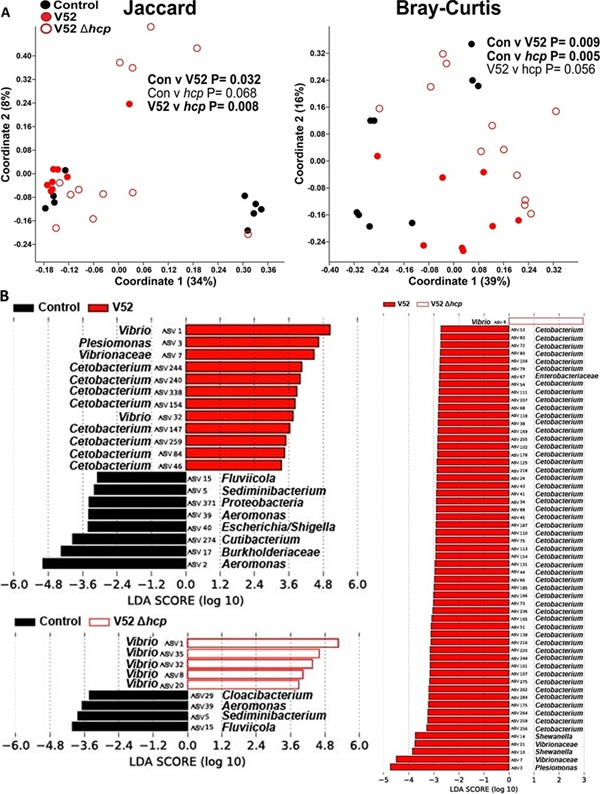
Principal Coordinate Analysis (PCoA) plot of zebrafish intestinal microbiome β-diversity shifts during aquatic stress.
β-Diversity of the zebrafish intestinal microbiome following V52 or V52 Δhcp V. cholerae infections expressed as PCoA plots.
Client Publication: A comprehensive biochemical characterization of settlement stage leptocephalus larvae of bonefish (Albula vulpes). Journal of Fish Biology, 2024. DOI: 10.1111/jfb.14846
Client Profile: A marine conservation biology team studying the survival mechanisms and physiological fitness of juvenile marine fishes.

Class-Specific Lipid Profiling of Marine Fish Larval Fitness

Analytical Challenge

Assessing the ecological fitness of marine fish larvae during metamorphosis is vital for predicting population survival against stressors. Traditional bulk fat measurements are too blunt; researchers needed class-specific characterization to differentiate between lipids used for energy (TAGs) and lipids used for tissue development (phospholipids).

Our Analytical Strategy

We utilized a customized Targeted Glycerolipid and Phospholipid Analysis workflow. By using optimized biphasic solvent extractions fortified with antioxidant shields, we accurately mapped the larvae's metabolic status while preserving delicate marine PUFAs.

Strategic Value & Outcome

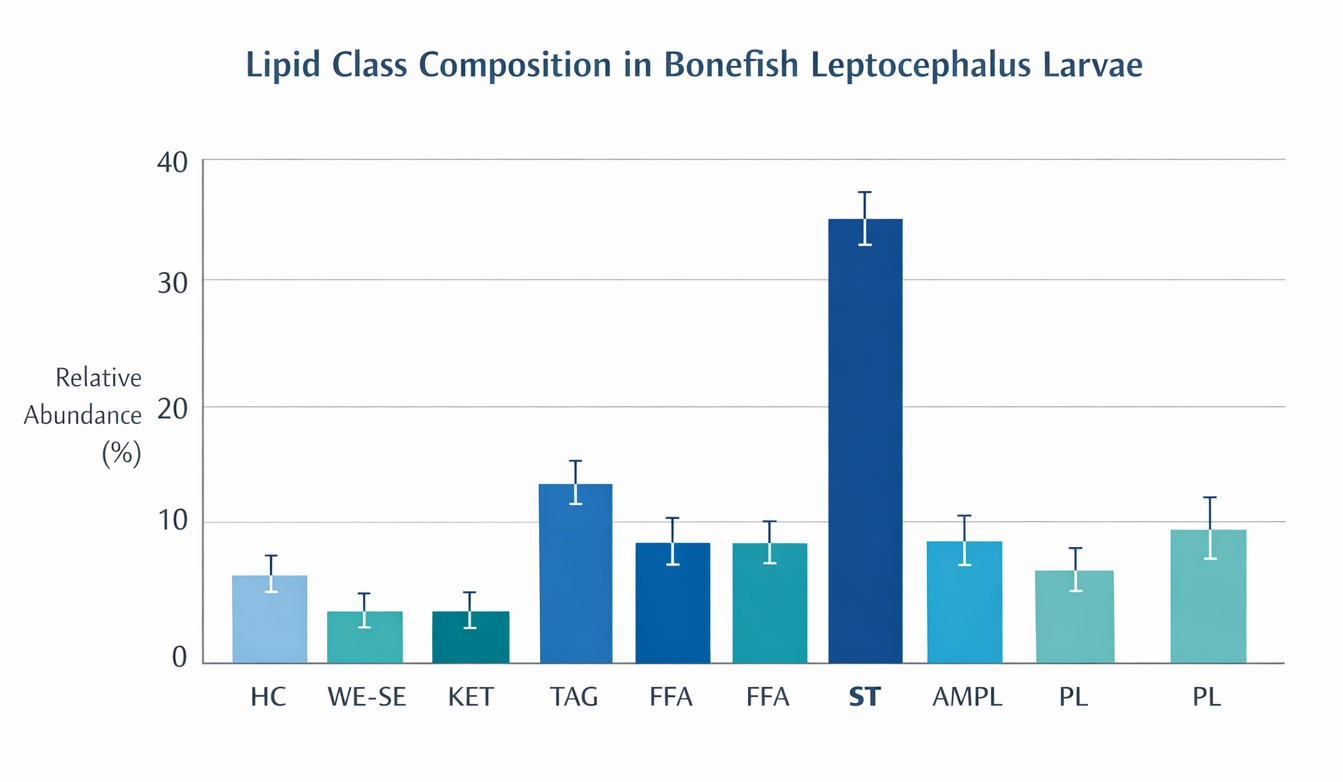
The quantitative lipidomic data successfully mapped the larvae’s key lipid reserves and class-specific compositional balance. This molecular baseline allows ecotoxicologists to evaluate how environmental toxicants or thermal stressors deplete energy-storage lipids and disrupt membrane-building lipid pools, ultimately reducing oceanic survival potential.

Bar chart showing targeted glycerolipid and phospholipid analysis in juvenile bonefish.
Composition of major lipid classes and fatty acid profiles in leptocephalus larvae.
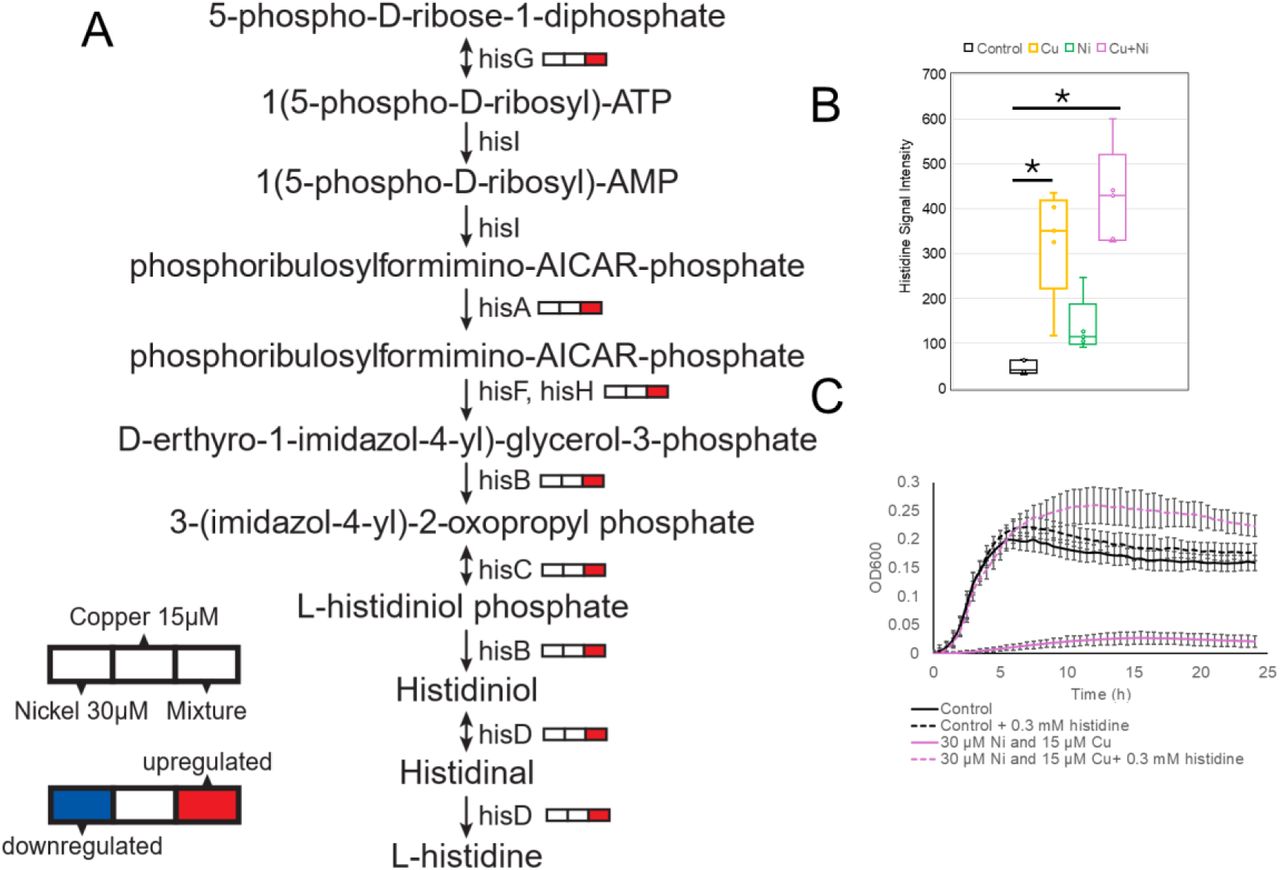
Client Publication: The molecular basis of the synergistic toxicity of Ni and Cu, common environmental co-contaminants. bioRxiv, 2025. DOI: 10.1101/2025.08.18.670860
Client Profile: An environmental toxicology team investigating how mixed pollutants trigger "amplified toxicity" mechanisms.

Decoding Synergistic Toxicity Mechanisms in Co-Exposure Models

Analytical Challenge

Aquatic ecosystems are frequently contaminated with metal mixtures. Co-exposure to Nickel (Ni) and Copper (Cu) often causes profound synergistic lethality. While transcriptomic assays indicate general stress, researchers required metabolic validation to locate the actual "choke points" causing sudden cellular death.

Our Analytical Strategy

We deployed an Untargeted Metabolomics Profiling workflow to contrast single-exposure and synergistic groups. High-resolution mass spectrometry was used to isolate the specific metabolite species uniquely destroyed by the metal combination.

Strategic Value & Outcome

The data in Figure 4 revealed that Ni and Cu synergistically obstruct specific synthesis hubs, obliterating cellular integrity. This precise validation provided the evidence chain required for establishing new, multi-metal exposure regulatory limits in aquatic environments.

Metabolomics data plots showing synergistic toxicity of Ni and Cu contaminants.
Intracellular metabolite levels following treatment with Ni, Cu, or combined metal stress.

Frequently Asked Questions

How does lipidomics support the establishment of Adverse Outcome Pathways (AOPs) in aquatic toxicology?
AOPs require a clear, causal link between a Molecular Initiating Event (MIE) and an adverse physiological outcome. Aquatic toxicology lipidomics acts as the crucial bridge. By precisely quantifying membrane degradation, receptor-mediated lipid signaling shifts, or endocrine precursor depletion, we provide the quantifiable chemical data needed to validate these pathways for environmental protection agencies.
Can you perform reliable lipid profiling on micro-samples like single zebrafish embryos or larvae?
Yes. Benefiting from the extreme sensitivity of modern mass spectrometry platforms, we have developed optimized micro-extraction protocols. Even with a minimal biomass of single zebrafish embryos or a small pool of Daphnia, we consistently generate highly reproducible, broad-coverage lipidomic and metabolomics profiles.
How do you differentiate toxicant-induced damage from a fish's normal environmental adaptation?
While temperature drops induce a natural increase in membrane PUFAs (homeoviscous adaptation) to maintain fluidity, toxicant exposure typically triggers distinct, destructive pathways. We differentiate the two by simultaneously quantifying specific adaptive structural lipids and definitive damage markers—such as specific ceramides, oxidized fatty acids, or lipid peroxides.
What is the advantage of integrating bile acid analysis when studying PFAS exposure?
PFAS compounds possess a molecular structure that heavily mimics endogenous bile acids. In fish, PFAS competitively binds to enterohepatic transporters, severely disrupting the bile acid pool and inducing compensatory hepatic lipidosis. Integrating quantitative bile acid analysis is the most direct method to uncover the biochemical root of PFAS-induced liver toxicity.
How does your platform overcome matrix suppression caused by high-fat aquatic tissues?
Tissues like fish liver or hepatopancreas contain overwhelming amounts of triacylglycerols. We mandate multi-step purification and Solid-Phase Extraction (SPE) enrichment to meticulously strip away these background lipids. Combined with the spiking of stable isotope standards, we completely neutralize matrix suppression to ensure absolute precision.
Can spatial lipidomics map the exact bioaccumulation zones of pollutants in bivalves?
Absolutely. Using MALDI Imaging mass spectrometry, we analyze intact cross-sections of oysters or mussels. This allows us to visually map exactly where lipophilic pollutants bioaccumulate and simultaneously image the localized lipid destruction and tissue necrosis occurring at that specific micro-environment.
Do your bioinformatics services support the deconvolution of synergistic toxicity from mixed pollutants?
Yes. Through advanced chemometrics and network pharmacology algorithms, we scan thousands of molecular responses. We can effectively separate the lipid shifts caused by individual heavy metals from the unique biochemical targets and pathways that are exclusively damaged due to "synergistic interaction."
How do you prevent the ex vivo oxidation of fish tissues during sample processing?
We enforce strict protocols requiring flash-freezing in liquid nitrogen immediately upon harvest. During processing, we maintain cryogenic temperatures and utilize extraction solvents pre-loaded with antioxidant shields (such as BHT or EDTA). This ensures that any oxidized lipids detected are the result of true in vivo toxicant exposure.
* Our services can only be used for research purposes and Not for clinical use.

Applications:


Online Inquiry

CONTACT US

Copyright © 2026 Creative Proteomics. All rights reserved.