Cholesterol Pathway & Homeostasis
Quantify core sterols and biosynthesis intermediates to interpret synthesis, turnover, and regulation.

Unlock detailed cholesterol biology with targeted sterol lipid analysis. Our modular panels quantify 50+ sterol species—including biosynthesis markers, oxysterols, esters, and diet/organism-derived sterols—empowering precise mechanistic interpretation.
Submit Your Request Now
×Our services have earned the trust of companies, schools, and organizations globally, and we remain dedicated to maintaining that trust.









Sterol lipids include sterols and related sterol-derived molecules that regulate membrane properties and serve as key metabolic and signaling components. In many studies, measuring "total cholesterol" alone is not sufficient to explain why a phenotype changes. Sterol profiling and quantification can help you:
Creative Proteomics provides a modular analytical platform for sterol lipid analysis using LC-MS/MS and/or GC-MS/MS, selected to match your analytes, matrix, and study objectives. We support quantitative analysis of 30+ sterol species with pmol-level sensitivity, supported by strict QC metrics including R² > 0.99 and 80–120% analytical accuracy.
| Panel Configuration | Best For | Included Analytes (High-Level) | Typical Research Intent |
|---|---|---|---|
| Core Sterol Panel | Baseline homeostasis | Cholesterol and core sterols | sterol profiling, cholesterol-related studies |
| Biosynthesis Module | Pathway activity inference | Sterol pathway markers (precursors/intermediates) | cholesterol biosynthesis, pathway modulation |
| Oxidation Module | Signaling & inflammation | Oxidation-relevant sterols (project-dependent) | oxysterol-related hypotheses |
| Esterification Module | Storage & transport | Sterol ester profiling via dedicated service page | CE-related studies and storage/transport biology |
| Organism/Diet Module | Fungi, yeast, & nutrition | Ergosterol and/or phytosterols (project-dependent) | ergosterol quantification, phytosterol studies |
| Custom Target Panel | Specialized targets | Project-defined sterol list | customized targeted sterol analysis |
Related add-on analyses include steroid hormones (available as a targeted module upon request).
| Your Primary Research Question | Recommended Panel | Scientific Rationale |
|---|---|---|
| "Is cholesterol homeostasis changing?" | Core Sterol Panel | Baseline sterol readouts for cross-group comparisons |
| "Is cholesterol synthesis regulated?" | Core + Biosynthesis Module | Adds pathway markers to interpret pathway activity shifts |
| "Is lipid transport or storage shifting?" | Core + Esterification Module | Adds sterol ester readouts via dedicated ester service |
| "Is oxidative stress signaling involved?" | Core + Oxidation Module | Adds oxidation-relevant sterols to support stress/signaling hypotheses |
| "Is this a fungal or yeast system?" | Core + Organism Module | Adds organism-relevant sterols such as ergosterol |
| "Is diet or plant sterol exposure relevant?" | Core + Organism/Diet Module | Adds phytosterols to distinguish exogenous vs endogenous signals |
| "I have a predefined biomarker list." | Custom Target Panel | Aligns coverage to your exact targets and reporting needs |
Many projects start with "total cholesterol," but mechanistic questions often need richer sterol lipids context.
| Research Requirement | Total Cholesterol Only | Targeted Sterol Profiling | The Scientific Value |
|---|---|---|---|
| Data Granularity | Single bulk value | 50+ individual species | Uncover specific molecular shifts |
| Pathway Inference | Static homeostasis | Precursor/Intermediate flux | Identify enzymatic bottlenecks |
| Oxidative Stress | Not detected | Bioactive oxysterols | Link sterols to redox signaling |
| Storage & Transport | Indirect estimate | Absolute Sterol Esters | Track lipid droplet remodeling |
| Interpretation | Phenomenological | Mechanistic | Publication-ready metabolic mapping |
Our platform provides quantification of 50+ sterol-related species categorized by their metabolic roles. All analyses are performed via high-sensitivity UHPLC-MS/MS (MRM) to ensure isomer resolution and accurate flux mapping. Metabolites may overlap across categories based on biological role.
| Cholesterol | Cholestanol | 3-beta, 15-alpha Cholestanol | 3-beta, 15-beta Cholestanol | 4,6-Cholestadiene-3-one |
| 5-chol-3-one | Cholestan-3-OH-15-one | 8(14)-Cholesten-3-beta-OH-15-one | 8(14)-Cholesten-3-beta, 15-alpha Diol | 8(14)-Cholesten-3-beta, 15-beta Diol |
| Lanosterol | Desmosterol | Lathosterol | 7-Dehydrocholesterol (7-DHC) | Zymosterol |
| 24-Dihydrolanosterol | 7-Dehydrodesmosterol | Squalene | Agnosterol | Dihydroagnosterol |
| 24S-Hydroxycholesterol | 27-Hydroxycholesterol | 25-Hydroxycholesterol | 7-Ketocholesterol | 7-alpha-Hydroxycholesterol |
| 7-beta-Hydroxycholesterol | 4-beta-Hydroxycholesterol | 24,25-Epoxycholesterol | 7-alpha-Hydroxycholestenone | 20-Hydroxycholesterol |
| 22 (R)-Hydroxycholesterol | 26-Hydroxycholesterol | 3,16-Dioxo Cholestenoic Acid | 5,6-alpha Epoxycholesterol | 4-chol-24OH-3one |
| 4-chol-25OH-3one | 4-chol-26(25r)OH-3one | 4-chol-27acid-3one | 4-chol-2OH-3one | TriOH Cholesterol |
| CE 14:0 | CE 16:0 | CE 16:1 | CE 18:0 | CE 18:1 |
| CE 18:2 | CE 18:3 | CE 20:3 | CE 20:4 | CE 20:5 |
| CE 22:5 | CE 22:6 | CE 24:0 | Total Cholesteryl Esters | CE 20:1 |
| beta-Sitosterol | beta-Sitosterone | Campesterol | Ergosterol | Cycloartenol |
| Stigmasterol | Campestanol | Stigmastanol | Fucosterol | Brassicasterol |
| 7-alpha-Hydroxy-4-cholesten-3-one (C4) | 7-alpha, 12-alpha-Dihydroxy-4-cholesten-3-one | 5-beta-Cholestane-3-alpha, 7-alpha, 12-alpha-triol | 27-Hydroxycholesterol | 7-alpha-Hydroxycholesterol |
| Cholesterol Sulfate | Desmosterol Sulfate | 24-Hydroxycholesterol Sulfate | 25-Hydroxycholesterol Sulfate | 27-Hydroxycholesterol Sulfate |
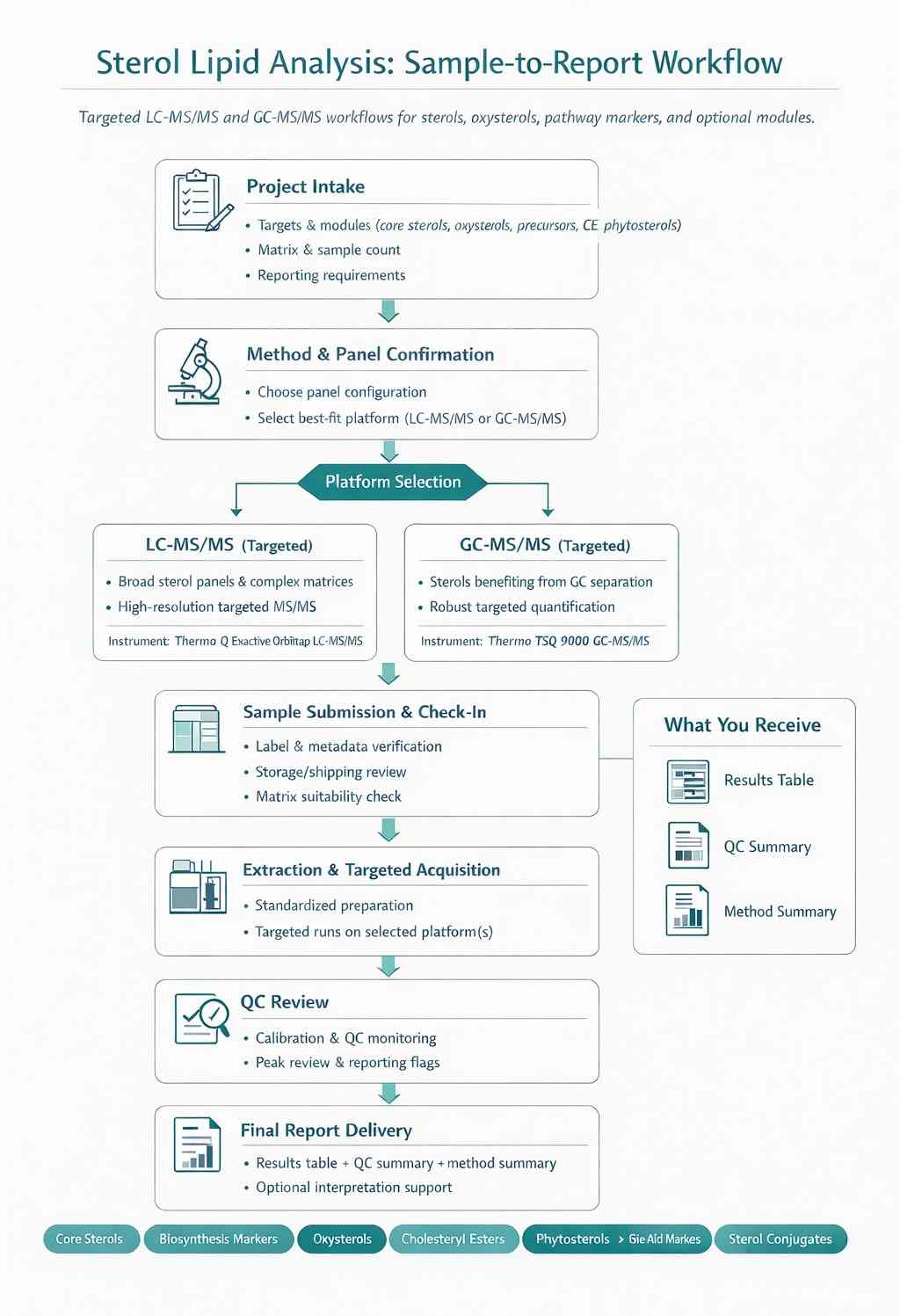
We leverage a Dual-Platform Strategy to address the unique physicochemical properties of the sterol lipidome, ensuring that thermally labile oxysterols and volatile precursors are analyzed on their optimal platforms.
| Platform | Instrument Model | Primary Application | Key Technical Advantage |
|---|---|---|---|
| LC–MS/MS | Thermo Scientific Q Exactive™ | Oxysterols & Broad Panels | HRAM (High-Resolution Accurate Mass) eliminates isobaric noise in complex matrices. |
| GC–MS/MS | Thermo Scientific TSQ™ 9000 | Distal Precursors & Sterols | Superior peak capacity; achieves sub-fmol sensitivity for volatile species. |
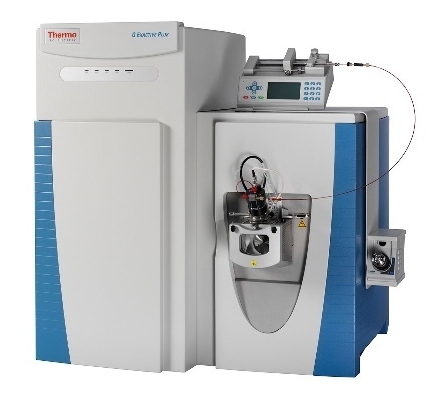
Thermo Fisher Q Exactive (Figure from Thermo)
TSQ™ 9000 Triple Quadrupole (Figure from Thermo)
Sterol lipids measurement quality can be influenced by matrix effects, isomeric overlap, and (for oxidation-relevant targets) handling-dependent artifacts. Our workflow is QC-forward so you can interpret results with confidence.
QC elements may include (panel-dependent):
If you have internal acceptance criteria (e.g., CV targets, recovery thresholds), we can align outputs to your requirements.
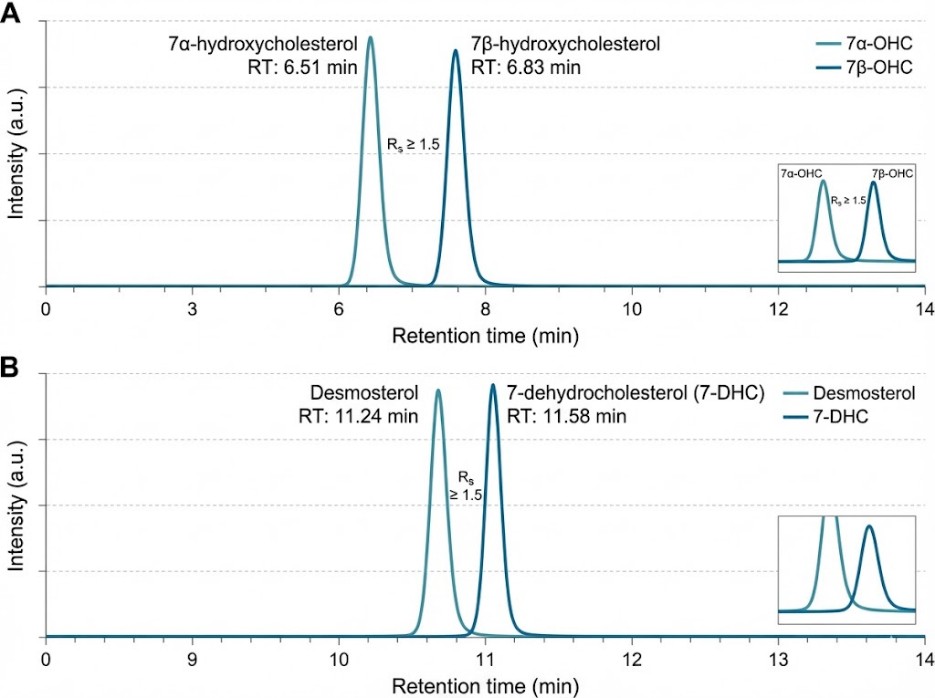
EIC overlays show baseline separation of key sterol isomers for interference-free quantitation.
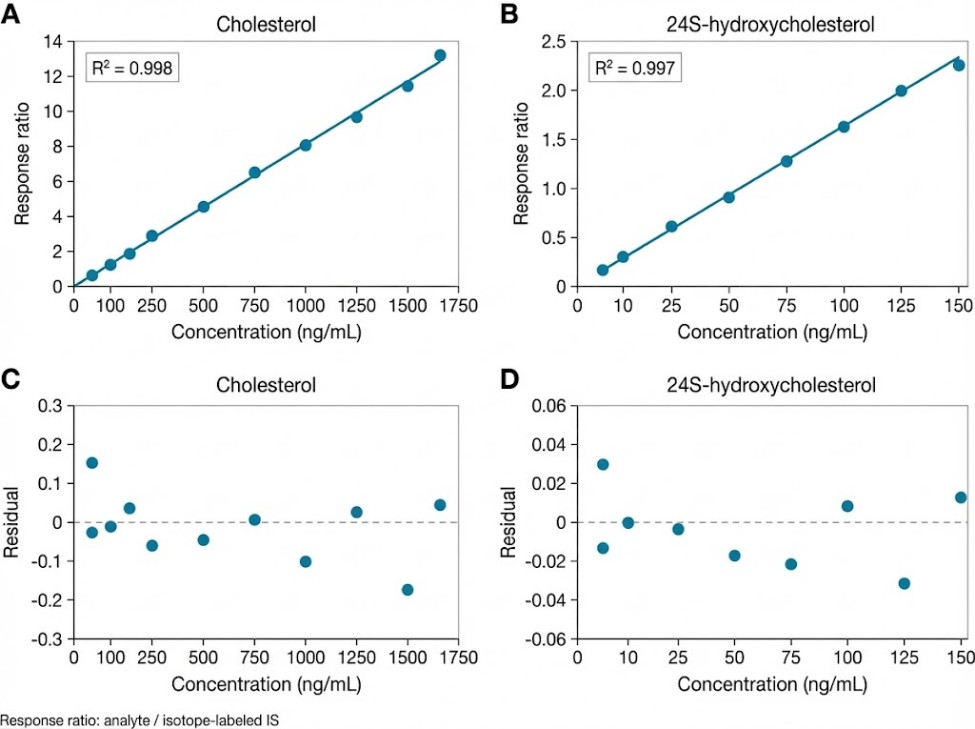
Calibration curves and residuals demonstrate linear response and robust quantitative performance.
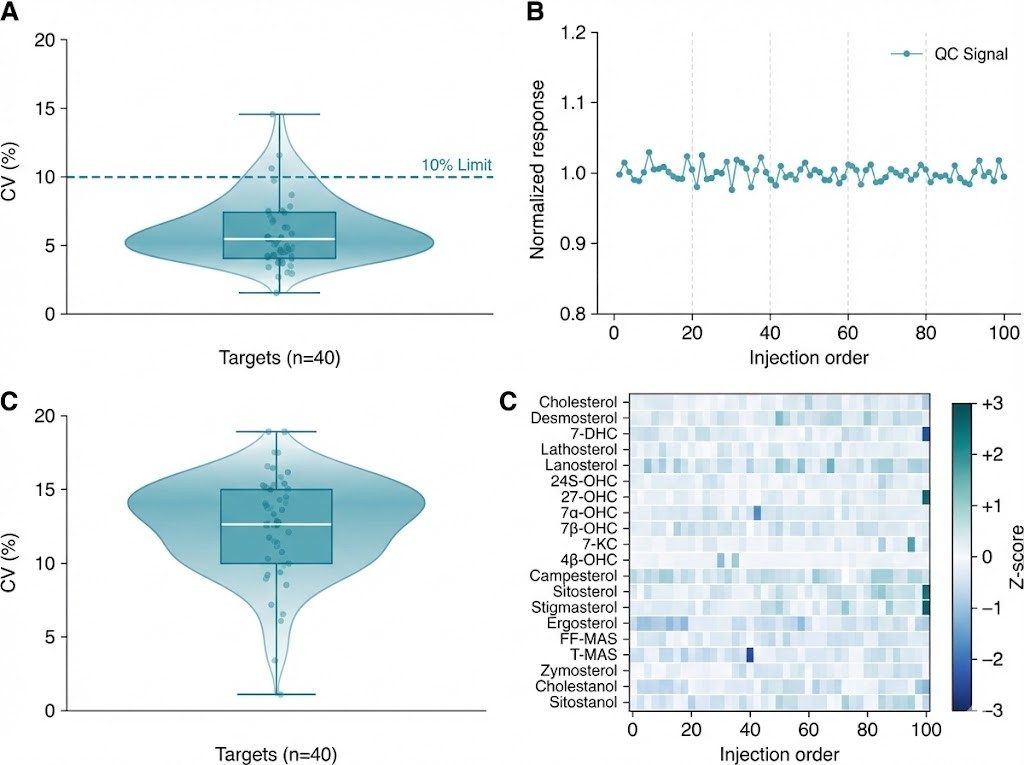
QC metrics show low CV and stable run-order performance across batches and injections.
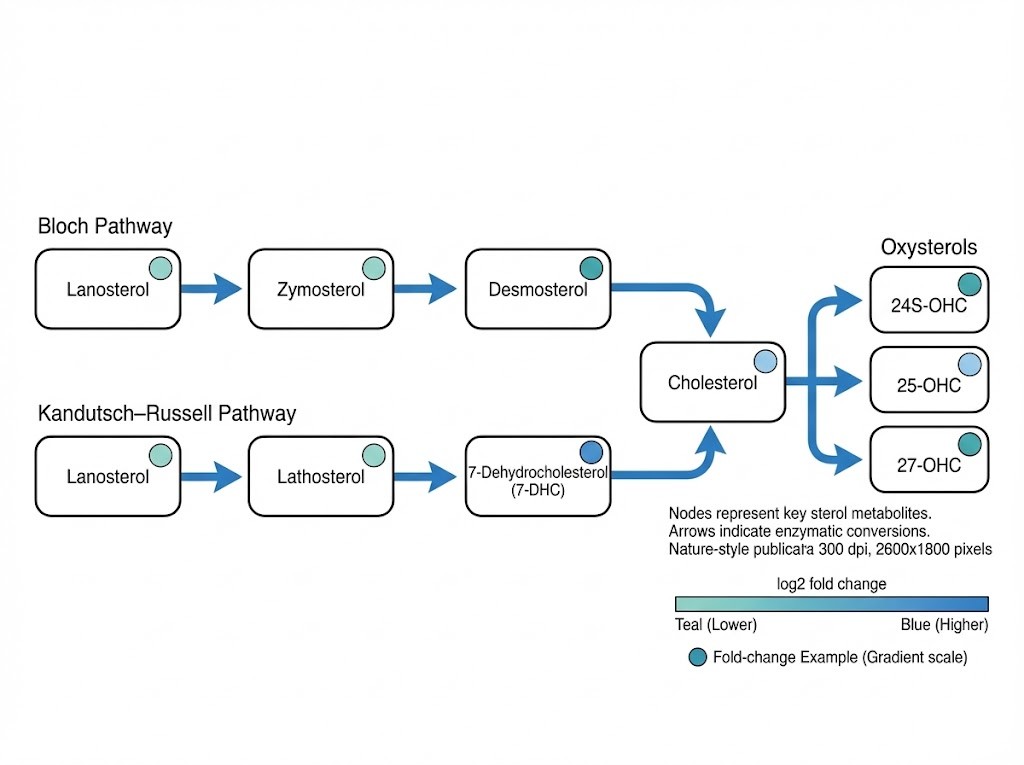
Concentrations mapped to Bloch and Kandutsch–Russell pathways for mechanistic interpretation.
Explore our Lipidomics Solutions brochure to learn more about our comprehensive lipidomics analysis platform.


Cholesterol Pathway & Homeostasis
Quantify core sterols and biosynthesis intermediates to interpret synthesis, turnover, and regulation.

Oxysterols: Oxidative Stress & Inflammatory Signaling
Measure signaling oxysterols to support redox- and immunity-driven mechanistic hypotheses.

Cardiometabolic, Lipoproteins & Sterol Esters
Profile sterols and cholesteryl esters to assess transport, storage, and lipid remodeling.

Neuroscience & Neurodegeneration
Track brain-relevant sterols/oxysterols (e.g., 24S-hydroxycholesterol) for sterol turnover insights.

Drug Mechanism & Safety Pharmacology
Monitor sterol-pathway shifts to evaluate target engagement, pathway liabilities, and on/off-target effects.

Microbial, Fungal & Nutrition Exposure Studies
Quantify organism- and diet-associated sterols (ergosterol/phytosterols) to separate source and biology.
Final requirements depend on matrix and panel scope. We will confirm details during project setup. Use the table below as a planning guide.
| Matrix | Recommended Handling | Shipping | Notes |
|---|---|---|---|
| Serum/Plasma | Keep cold; minimize freeze–thaw; protect from light when relevant | Dry ice | Provide collection additives and storage history |
| Tissue | Snap-freeze if possible; document weight and region | Dry ice | Homogenization strategy may affect reproducibility |
| Cultured Cells | Rapid quench; document cell count and buffers | Dry ice | Provide growth conditions and treatment timing |
| Microbial/Fungal Samples | Standardized harvest; document OD/timepoint | Dry ice | Ergosterol-related targets may be sensitive to conditions |
| Plant Extracts | Document extraction solvent; protect from light when relevant | Cold packs or dry ice (as advised) | Provide extraction protocol for comparability |
If your goal is discovery, untargeted can help. If your goal is decision-making and validation in sterol biology, targeted sterol lipids is often the better fit.
| Decision Factor | Untargeted Lipidomics | Targeted Sterol Lipidomics | Why Targeted is Essential |
|---|---|---|---|
| Analytical Scope | Broad lipidome survey | Focused sterol depth | Enables full coverage of critical sterol subclasses |
| Quantitation Level | Semi-quantitative | Absolute (isotope dilution) | Necessary for accurate cohort-level comparisons |
| Isomer Resolution | High co-elution risk | Baseline resolution | Resolves key isomers like 7α- vs. 7β-hydroxycholesterol |
| Trace Sensitivity | nmol/mL range | Low pg/mL range | Captures rare signaling oxysterols often missed in untargeted scans |
| Dynamic Range | 2–3 orders of magnitude | 4–6 orders of magnitude | Enables simultaneous detection of cholesterol and precursors |
Why is LC–MS/MS preferred over GC–MS for oxysterol analysis?
LC–MS/MS prevents artifactual oxidation by avoiding high-temp derivatization. HRAM eliminates isobaric interferences in tissues, ensuring pg/mL sensitivity for oxysterols.
How do you resolve 7α-OHC and 7β-OHC isomers in a single run?
7α/7β-OHC require Rs ≥ 1.5 to distinguish enzymatic vs. stress markers. We use UHPLC with sub -2um columns to ensure baseline separation and accurate quantification.
Which biomarkers are best for assessing endogenous cholesterol synthesis?
Lathosterol and Desmosterol ratios track Kandutsch–Russell and Bloch flux. These markers pinpoint DHCR7/24 inhibition, providing synthesis rates independent of dietary cholesterol.
How do you prevent artifactual sterol oxidation during sample processing?
We use deoxygenated solvents, BHT, and light protection. Adding isotope-labeled IS at the earliest stage compensates for degradation, ensuring data reflects true in vivo status.
What are the challenges of profiling sterols in brain tissue vs. plasma?
Brain has >1000 times cholesterol/oxysterol ratios. We use specialized SPE to remove bulk lipids and avoid ion suppression. Plasma uses LLE with matrix-matched calibration.

Services:
Resource:
Platform:
Online Inquiry
CONTACT US