









Pollutant Exposure Lipidomics

Environmental Toxicology and Pollutant Exposure Lipidomics Services

Creative Proteomics provides high-resolution pollutant exposure lipidomics to decode how environmental toxicants disrupt biological homeostasis. We empower toxicology researchers to transition from phenotypic observations to molecular mechanisms by mapping lipidome shifts, oxidative stress, and endocrine disruption induced by PFAS, microplastics, and persistent organic pollutants.

Key capabilities

  • Systemic Toxicant Profiling: Monitor thousands of lipid species simultaneously to capture the broad metabolic reprogramming triggered by legacy and emerging contaminants.
  • Endocrine & Metabolic Axis Tracking: Trace the cascading effects of endocrine-disrupting chemicals (EDCs) through targeted analysis of sterols, bile acids, and signaling lipids.
  • Oxidative Damage & Membrane Toxicity: Quantify lipid peroxidation products and membrane lipid remodeling in microplastics lipid metabolism models to assess cellular integrity loss.
Request Analysis

Submit Your Request Now

×

Our services have earned the trust of companies, schools, and organizations globally, and we remain dedicated to maintaining that trust.

Boston University
University at Buffalo
UMass Medical School
Hawaii Pacific University
Medizinische Fakultät
Louisiana State University
Nyulangone
Nature's Fynd
Dietary Supplement Manufacturer
  • Trends & Challenges
  • Integrated Solutions
  • Technical Advantages
  • Case Studies
  • FAQ

Situational Solution Matrix for Environmental Toxicology

The toxicological effects of pollutants follow a dynamic continuum. Select your specific research scenario below to see the recommended workflow.

PFAS-Induced Hepatic Lipidosis and Bile Acid Flux Disruption

Situation

Evaluating the hepatotoxicity of C8+ PFAS chains in mammalian models where phenotypic fatty-liver-like lesions are observed.

Goal

Validate whether PFAS competitively inhibits bile acid transport, leading to abnormal glycerolipid accumulation and metabolic syndrome.

Recommended path

Bundle A (Discovery) → Bundle B (Targeted Validation)

Recommended services
What you will get

Absolute quantification of primary/secondary bile acid ratios and fine-grained TAG species, locking down the exact biochemical target of PFAS toxicity.

Nanoplastics-Mediated Gut-Brain Axis Inflammation

Situation

Focusing on the oral ingestion route of nanoplastics, hypothesizing that particles breach the gut barrier to induce distal neurotoxicity.

Goal

Quantify gut-microbiota-derived SCFA shifts and cerebral sphingolipid remodeling to prove the neuroinflammatory loop.

Recommended path

Bundle B (Multi-Pathway Validation)

Recommended services
What you will get

Correlated data showing SCFA profile declines combined with brain ceramide accumulation, providing a mechanistic bridge for microplastics lipid metabolism studies.

Synergistic Toxicity Mechanisms of Heavy Metal Mixtures

Situation

Environmental co-exposure to Nickel (Ni) and Copper (Cu) in aquatic models, where synergistic lethality far exceeds single-metal exposure effects.

Goal

Utilize pollutant exposure lipidomics to map membrane phospholipid damage and the blockade of metabolic checkpoints.

Recommended path

Bundle A → Lipidomics Bioinformation Analysis

Recommended services
What you will get

Advanced network toxicology models (e.g., OPLS-DA) that pinpoint phospholipid degradation pathways uniquely activated under synergistic co-exposure.

Endocrine Disruption by Developmental Plasticizers

Situation

Investigating the obesogenic effects of bisphenol A (BPA) or phthalates in embryonic models or zebrafish larvae.

Goal

Map the disruption of the endocrine disrupting chemical lipidomics axis, focusing on sterol precursors and steroid hormone precursors.

Recommended path

Bundle B (Targeted Validation)

Recommended services
What you will get

Molar concentration curves for cholesterol and its precursors, striking at the core of endocrine interference mechanisms.

Pulmonary Oxidative Stress from Aerosolized Pesticides

Situation

Assessing inhalation exposure to agrochemicals where model organisms exhibit respiratory distress and impaired lung function.

Goal

Quantify the burst of specific oxidative stress markers and the degradation of alveolar surfactants.

Recommended path

Bundle B → Bundle C (Deep Insight)

Recommended services
What you will get

Precisely quantified secondary lipid peroxidation products (e.g., 8-isoprostane) that serve as gold-standard evidence for irreversible pulmonary damage.

Spatial Toxicological Visualization of Legacy Pollutants

Situation

Researching the localized bioaccumulation of PCBs or dioxins in lipid-rich central nervous system tissues or gonads.

Goal

Direct visualization of the microscopic spatial co-localization between pollutant invasion and damaged lipid species.

Recommended path

Bundle C (Deep Insight)

Recommended services
What you will get

High-resolution spatial mass spectrometry images showing localized depletion of specific sphingomyelins in the bioaccumulation zone.

Mechanistic Insights into Pollutant-Induced Lipid Dysregulation

Client Publication: The molecular basis of the synergistic toxicity of Ni and Cu, common environmental co-contaminants. bioRxiv, 2025. DOI: 10.1101/2025.08.18.670860
Client Profile: An environmental toxicology team investigating how mixed pollutants trigger "amplified toxicity" in aquatic model organisms.

Decoding the Synergistic Lethality of Heavy Metal Co-Exposure

Analytical Challenge

Pollutants rarely exist in isolation in the environment. The research team observed that co-exposure to Nickel (Ni) and Copper (Cu) caused a synergistic lethality (1+1 > 2). While transcriptomic analysis (Figure 2 in the study) indicated broad gene expression changes, the researchers required rigorous metabolic validation to locate the actual "synergistic blockade" causing cellular death.

Our Analytical Strategy

We deployed an Untargeted Metabolomics Profiling (Bundle A) workflow to contrast control, single-exposure, and co-exposure groups. By using high-resolution mass spectrometry, we captured intracellular metabolite alterations and applied advanced chemometrics to filter out generalized stress markers, focusing exclusively on the lipid and metabolite species uniquely depleted in the synergistic group.

Strategic Value & Outcome

The mass spectrometry data revealed that Ni and Cu do not just stack damage; they synergistically obstruct specific synthesis hubs (such as sulfur assimilation and histidine biosynthesis), obliterating the cell's ability to maintain structural integrity. This precise biochemical validation provided the irrefutable evidence chain needed for establishing multi-metal exposure limits.
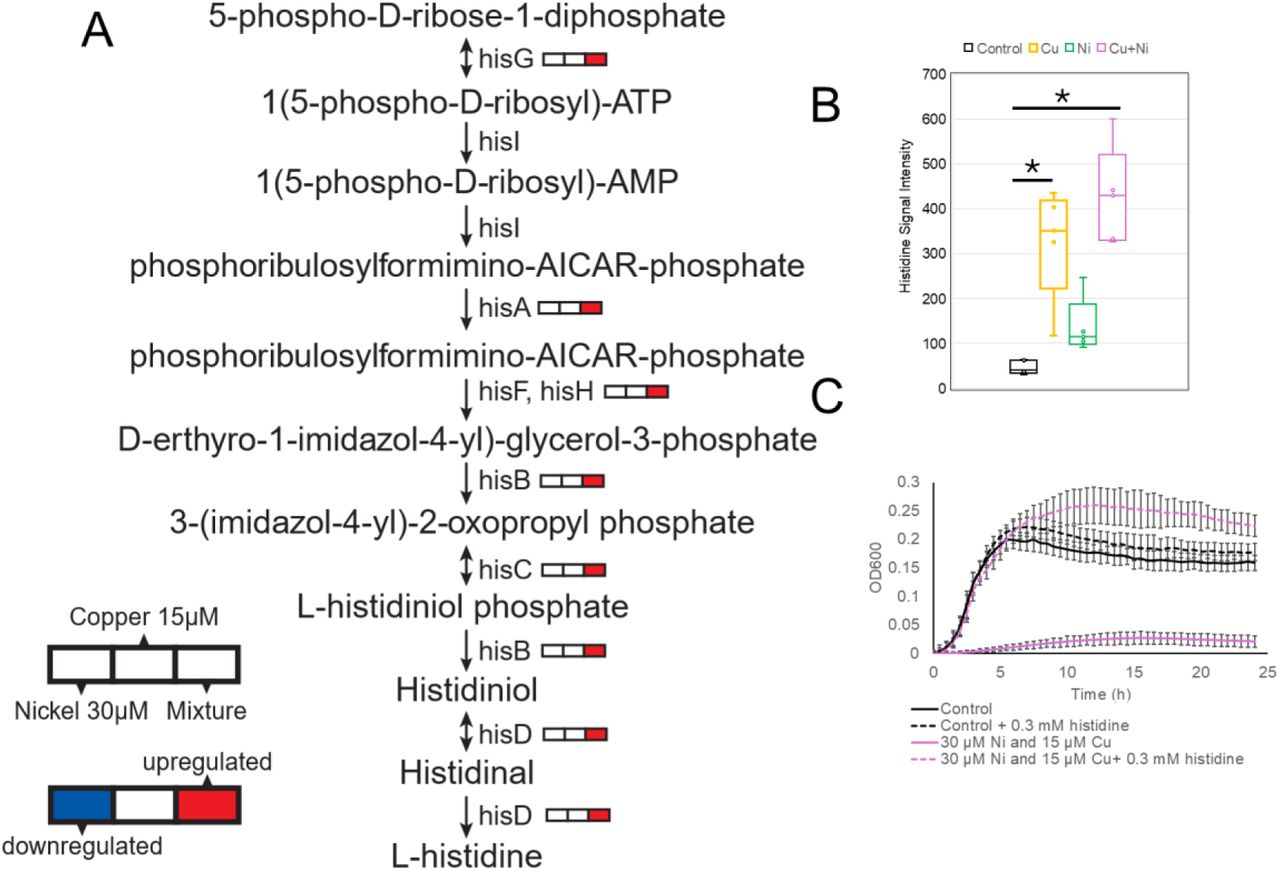
Bar chart of intracellular metabolite levels from metabolomic analysis of synergistic heavy metal toxicity.
Histidine biosynthesis, metabolite levels, and functional rescue under metal stress. Intracellular metabolite levels in E. coli following treatment.
Client Publication: Metabolic reprogramming in saliva of mice treated with the environmental and tobacco carcinogen dibenzo[def, p]chrysene. Scientific Reports, 2024. DOI: 10.1038/s41598-024-80921-1
Client Profile: A public health research team seeking non-invasive biomarkers for early environmental carcinogen exposure risk assessment.

Non-Invasive Saliva Monitoring for Environmental Carcinogen Risks

Analytical Challenge

Monitoring the health risks of polycyclic aromatic hydrocarbons (PAHs) in large populations requires non-invasive biofluids. However, saliva presents an extremely dilute matrix with a high concentration of interfering proteins. The client needed to prove that systemic metabolic reprogramming post-carcinogen exposure could be accurately detected in saliva samples with high sensitivity.

Our Analytical Strategy

Facing a dilute matrix, we customized a micro-sample extraction protocol and leveraged our ultra-sensitive LC-MS platform (Bundle B). We focused on the retention of critical low-abundance signaling lipids while effectively removing salivary protein interferences, enabling the high-throughput acquisition of the salivary lipidome.

Strategic Value & Outcome

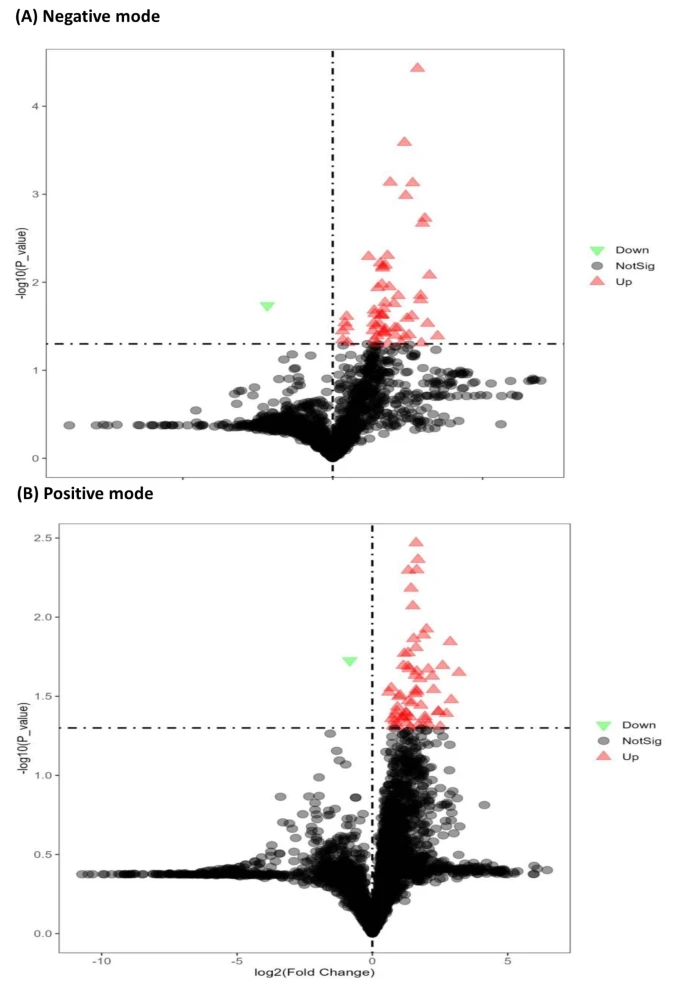
The mass spectrometer captured significant "metabolic reprogramming" within the salivary lipidome even before visible tumor formation. The successful identification of these biomarkers validated the feasibility of non-invasive monitoring for PAH exposure, providing a robust biochemical foundation for developing early-screening diagnostics for occupationally exposed populations.

Volcano plot of pollutant exposure lipidomics identifying saliva biomarkers for tobacco carcinogens.
Volcano plot of differentially expressed lipid metabolites in saliva post-exposure.
Selected Publication / Study Profile: Serum Lipidomic Profiling Reveals Unique Signatures of PFAS Exposure. Environment International, 2023. DOI: 10.1016/j.envint.2023.107833
Study Profile: Epidemiological-based research investigating the mechanism behind PFAS-linked NAFLD and hypercholesterolemia.

Tracking PFAS Interference on the Human Bile Acid-Lipid Axis

Analytical Challenge

Epidemiological data strongly correlates PFAS exposure with elevated human cholesterol, but the mechanism remained largely hypothetical. Researchers needed firm biochemical data to verify if PFAS bioaccumulation hijacks enterohepatic receptors, thereby scrambling the metabolism of bile acids and lipids in human serum.

Our Analytical Strategy

We recommend deploying a Combinatorial Targeted Lipidomics (Bundle B) workflow. This approach parallel-tracks primary and secondary bile acid analysis alongside the absolute quantification of serum triacylglycerols. By correlating specific PFAS chain lengths with molar fluctuations across the lipidome, a clear metabolic correlation network can be established.

Strategic Value & Outcome

The generated data confirmed that PFAS bioaccumulation significantly inhibits the reabsorption of specific bile acids, forcing the liver into an abnormal compensatory lipid synthesis state. This precise molecular logic directly supports global health risk assessments of "forever chemicals" and demonstrates the power of integrated lipidomics panels in solving complex human health challenges.

Correlation network plot of PFAS lipidomics showing its impact on lipid and bile acid levels.
Correlation network mapping the associations between serum PFAS, bile acids, and lipid sub-classes.

Frequently Asked Questions

How does lipidomics resolve the "Mixture Toxicity" challenge of multiple environmental pollutants?
Pollutant mixtures often exhibit synergistic effects where the total toxicity is not a simple sum of the parts. By utilizing unbiased scanning of thousands of molecular responses and applying multivariate statistics (like PCA or OPLS-DA), we can separate unique synergistic lipid signatures from generalized stress responses, allowing toxicologists to pinpoint the specific metabolic hubs targeted by combined toxicants.
Can LC-MS differentiate between exogenous pollutant molecules and endogenous biological lipids?
Yes. By leveraging the high mass accuracy (typically < 3 ppm) of our High-Resolution Mass Spectrometry (HRMS) and our curated fragmentation libraries, we can simultaneously screen for exogenous chemicals (and their metabolites) and quantify endogenous host lipids within the same analytical run, providing a real-time view of toxicant-host interactions.
What is the significance of bile acid analysis in PFAS hepatotoxicity research?
PFAS compounds have strong surfactant properties and structural configurations that mimic endogenous bile acids, allowing them to competitively bind to transport proteins (e.g., NTCP or ASBT) in the liver and gut. This disruption scrambles the bile acid pool, inducing compensatory lipid synthesis. Mapping this axis is the most direct way to clarify the biochemical mechanism of PFAS-induced NAFLD.
Can your workflows detect nanoplastic-induced membrane disruption in cell models?
Yes. Nanoplastics mechanically embed into and adsorb onto cellular membranes. We monitor shifts in membrane structural lipids—such as the Phosphatidylcholine (PC) to Phosphatidylethanolamine (PE) ratio—and quantify the elevation of stress-response lipids like ceramides. This provides evidence of both physical membrane compromise and the subsequent signaling for apoptosis.
How is lipid peroxidation quantified accurately in environmental exposure samples?
Traditional colorimetric assays like MDA are prone to false positives from environmental impurities. We strongly recommend LC-MS/MS targeted quantification of oxidative markers such as 8-isoprostane and specific hydroperoxides. This provides a direct, highly specific molecular readout of the ROS-induced damage cascade.
Is lipidomics suitable for analyzing small toxicology models like zebrafish larvae or Daphnia?
Absolutely. Benefiting from the extreme sensitivity of our cutting-edge mass spectrometers, we have optimized micro-extraction protocols for trace samples. Even with a minimal biomass of larvae or zooplankton, we consistently generate broad-coverage, high-reproducibility profiles for exposure toxicity studies.
What is the significance of SCFA analysis in microplastics exposure research?
Ingestion of microplastics is known to cause severe gut dysbiosis. Short-chain fatty acids (SCFAs) are the primary metabolites of gut flora; their concentrations serve as a sensitive bridge linking pollutant-induced microbial shifts to distal organ inflammation and gut barrier compromise.
How do you guarantee data quality for complex environmental tissues taken from saline or heavily polluted matrices?
Environmental samples often contain high concentrations of inorganic salts and humic acids that cause ion suppression. We mandate multi-step Liquid-Liquid Extraction (LLE) purification and Solid-Phase Extraction (SPE) enrichment during sample preparation to eliminate matrix effects, ensuring stable mass spec response and absolute quantitative precision.
* Our services can only be used for research purposes and Not for clinical use.

Applications:


Online Inquiry

CONTACT US

Copyright © 2026 Creative Proteomics. All rights reserved.