









Mechanistic Toxicology Lipidomics

Mechanistic Toxicology and Risk Assessment Lipidomics Services

Creative Proteomics provides high-resolution lipidomics to elucidate the molecular mechanisms of toxicity and support environmental risk assessments. We empower toxicologists to transition from phenotypic endpoints to molecular initiating events (MIEs) by delivering absolute quantification of lipidome shifts, oxidative stress, and endocrine disruption required for OECD Adverse Outcome Pathway (AOP) validation and regulatory safety evaluations.

Key capabilities

  • Endocrine Disruption Tracking: Quantify sterol flux and steroid precursors to validate the cross-generational reproductive toxicity of emerging pollutants.
  • Adverse Outcome Pathway (AOP) Validation: Link molecular lipid membrane degradation directly to apical endpoints like hepatotoxicity or neurodegeneration using gold-standard biomarkers.
  • Mixture Toxicology Deconvolution: Utilize advanced bioinformatics to isolate synergistic molecular targets from complex environmental co-exposures and pollutant cocktails.
Request Analysis

Submit Your Request Now

×

Our services have earned the trust of companies, schools, and organizations globally, and we remain dedicated to maintaining that trust.

Boston University
University at Buffalo
UMass Medical School
Hawaii Pacific University
Medizinische Fakultät
Louisiana State University
Nyulangone
Nature's Fynd
Dietary Supplement Manufacturer
  • Trends & Challenges
  • Integrated Solutions
  • Technical Advantages
  • Case Studies
  • FAQ

Situational Solution Matrix for Environmental Risk Assessment

Lipidomics provides a mechanistic bridge between chemical exposure and system-level toxicity. Select your specific exposure research scenario below to see the recommended workflow.

Endocrine Disrupting Chemicals (EDCs) and Reproductive Toxicity

Situation

Investigating reproductive toxicity triggered by endocrine disrupting chemicals such as bisphenols, phthalates, PFAS, or microplastics in zebrafish, rodent, or avian models.

Goal

Identify molecular evidence of endocrine disruption by quantifying sterol metabolism, cholesterol turnover, and steroid precursor depletion.

Recommended path

Bundle B (Targeted Validation) → Bioinformatic pathway interpretation

Recommended services
What you will get

Absolute molar quantification of cholesterol, sterol intermediates, and lipid hormone precursors, providing molecular evidence linking pollutant exposure to disrupted steroidogenesis pathways.

Hepatic Oxidative Stress and Hepatotoxicity Mechanism Mapping

Situation

Animal models exposed to industrial chemicals, pesticides, or PFAS display hepatomegaly, steatosis, or liver dysfunction.

Goal

Differentiate adaptive lipid accumulation from true oxidative damage, mitochondrial dysfunction, and inflammatory lipid signaling.

Recommended path

Bundle A (Discovery) → Bundle B (Targeted Validation)

Recommended services
What you will get

Quantitative evidence of lipid peroxidation, inflammatory eicosanoid bursts, and phospholipid degradation, enabling clear differentiation between metabolic adaptation and toxic injury.

Neurotoxicity and Blood-Brain Barrier Disruption

Situation

Investigating the neurotoxic effects of particulate matter, nanoparticles, pesticides, or microplastics on central nervous system integrity.

Goal

Identify lipid degradation associated with myelin damage, neuroinflammation, and apoptosis signaling.

Recommended path

Bundle A (Discovery) → Bundle B (Validation) → Bundle C (Spatial insight)

Recommended services
What you will get

Mechanistic evidence of sphingomyelin degradation, ceramide accumulation, and spatial lipid distribution changes across brain regions affected by toxic exposure.

Building Adverse Outcome Pathways (AOPs) for Regulatory Submission

Situation

Generating mechanistic toxicology data packages required for regulatory frameworks such as EPA ToxCast, OECD AOP programs, or REACH chemical registration.

Goal

Link molecular initiating events (MIEs) to downstream metabolic and cellular damage through pathway-resolved lipidomics.

Recommended path

Bundle A (Discovery) → Bundle B (Validation) → Deep bioinformatic interpretation

Recommended services
What you will get

Mechanistic datasets linking exposure-driven lipid metabolism disruption with key toxicological pathways required for regulatory risk assessment documentation.

Spatially Resolved Tissue Toxicity and Pollutant Bioaccumulation

Situation

Persistent pollutants distribute unevenly across tissues, masking localized toxicity when samples are homogenized.

Goal

Visualize pollutant-induced lipid alterations directly within tissue architecture.

Recommended path

Bundle C (Spatial Lipidomics Insight)

Recommended services
What you will get

High-resolution MALDI imaging maps demonstrating the spatial co-localization of pollutant accumulation with membrane lipid degradation and localized tissue damage.

Mixture Toxicity and Synergistic Pollutant Interactions

Situation

Environmental systems often involve co-exposure to multiple pollutants such as heavy metals, pesticide mixtures, or PFAS variants.

Goal

Identify metabolic checkpoints that collapse under combined exposure and distinguish synergistic toxicity mechanisms.

Recommended path

Bundle A (Discovery) → Bundle B (Validation) → Network toxicology modeling

Recommended services
What you will get

Network-level lipidomic datasets revealing synergistic pathway disruptions and metabolic nodes responsible for amplified toxicity in mixed-exposure environments.

Selected Case Studies in Mechanistic Toxicology Lipidomics

Selected Publication: Hyötyläinen et al., 2021. Frontiers in Genetics. DOI: 10.3389/fgene.2021.721507
Who needs this: Teams studying PFAS immunotoxicity, endocrine-active pollutants, or exposure-driven metabolic reprogramming in preclinical models.

PFAS-Driven Lipid Remodeling Linked to Early Immune Injury

Method used

Female NOD mice were exposed to perfluoroundecanoic acid (PFUnDA) during gestation, lactation, and early life. Serum samples from offspring were analyzed by comprehensive lipidomics, and the lipid data were evaluated against exposure level, insulitis grade, macrophage counts, and apoptotic markers in pancreatic islets.

Result obtained

PFUnDA exposure produced dose-dependent lipidomic shifts, with reduced phosphatidylcholines, ether phosphatidylcholines, and PUFA-containing triacylglycerols. These lipid changes also tracked with insulitis-related endpoints, making the study a strong example of how mechanistic toxicology lipidomics can connect environmental exposure to pathway-level injury signals rather than phenotype alone.

Recommended path

Bundle A (Untargeted Lipidomics Profiling) → Bundle B (Targeted Validation of phospholipids/sphingolipids) → Bioinformatic correlation analysis
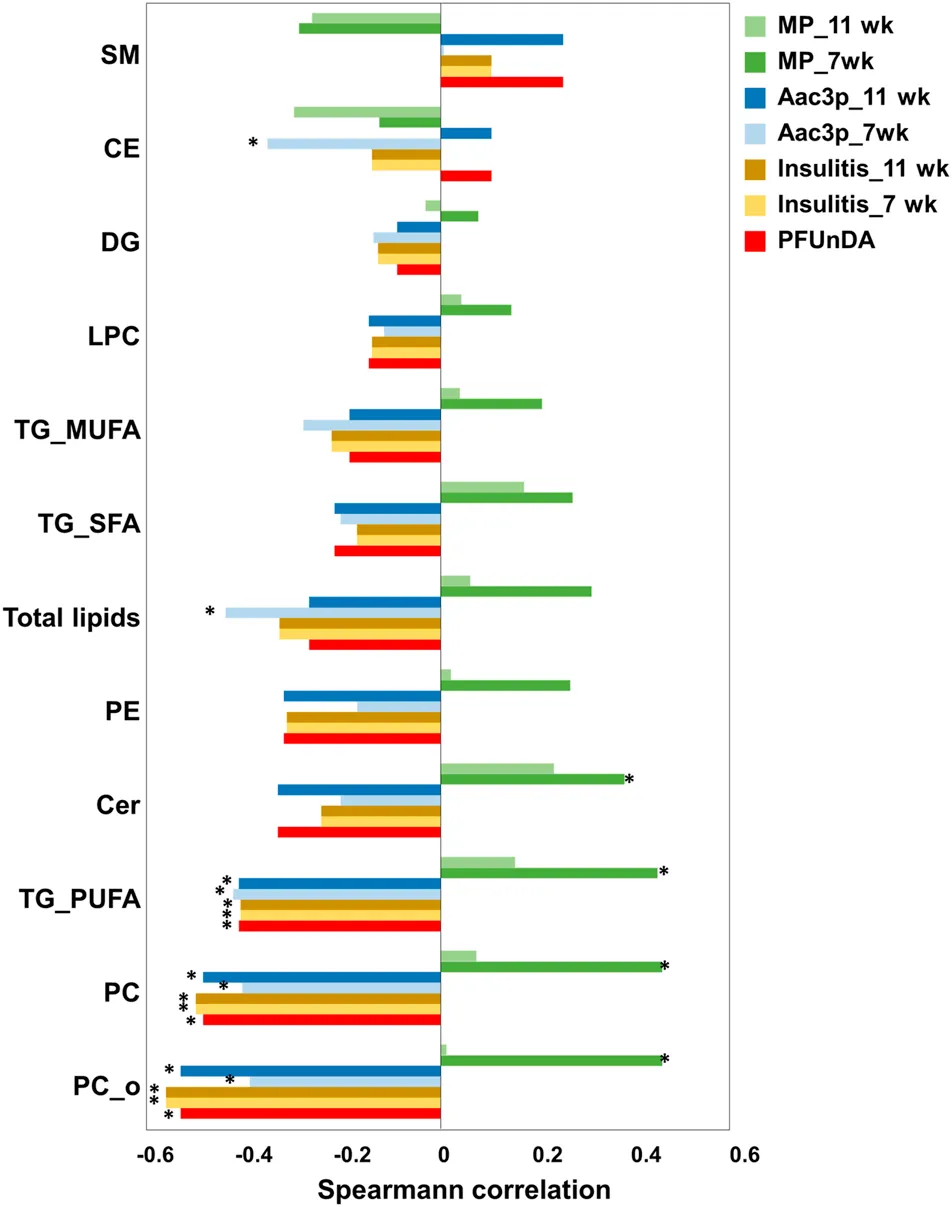
Correlation-based mechanistic toxicology lipidomics figure showing PFAS exposure-associated phospholipid and triglyceride shifts with insulitis-related endpoints.
Spearman correlation between lipid classes and PFUnDA exposure levels
Selected Publication: Li et al., 2022. Frontiers in Pharmacology. DOI: 10.3389/fphar.2022.907271
Who needs this: Toxicologists comparing hepatotoxic mechanisms across chemicals, and teams building liver injury workflows for hazard identification or mechanistic risk assessment.

Chemical-Specific Liver Injury Signatures in Acute Cholestasis Models

Method used

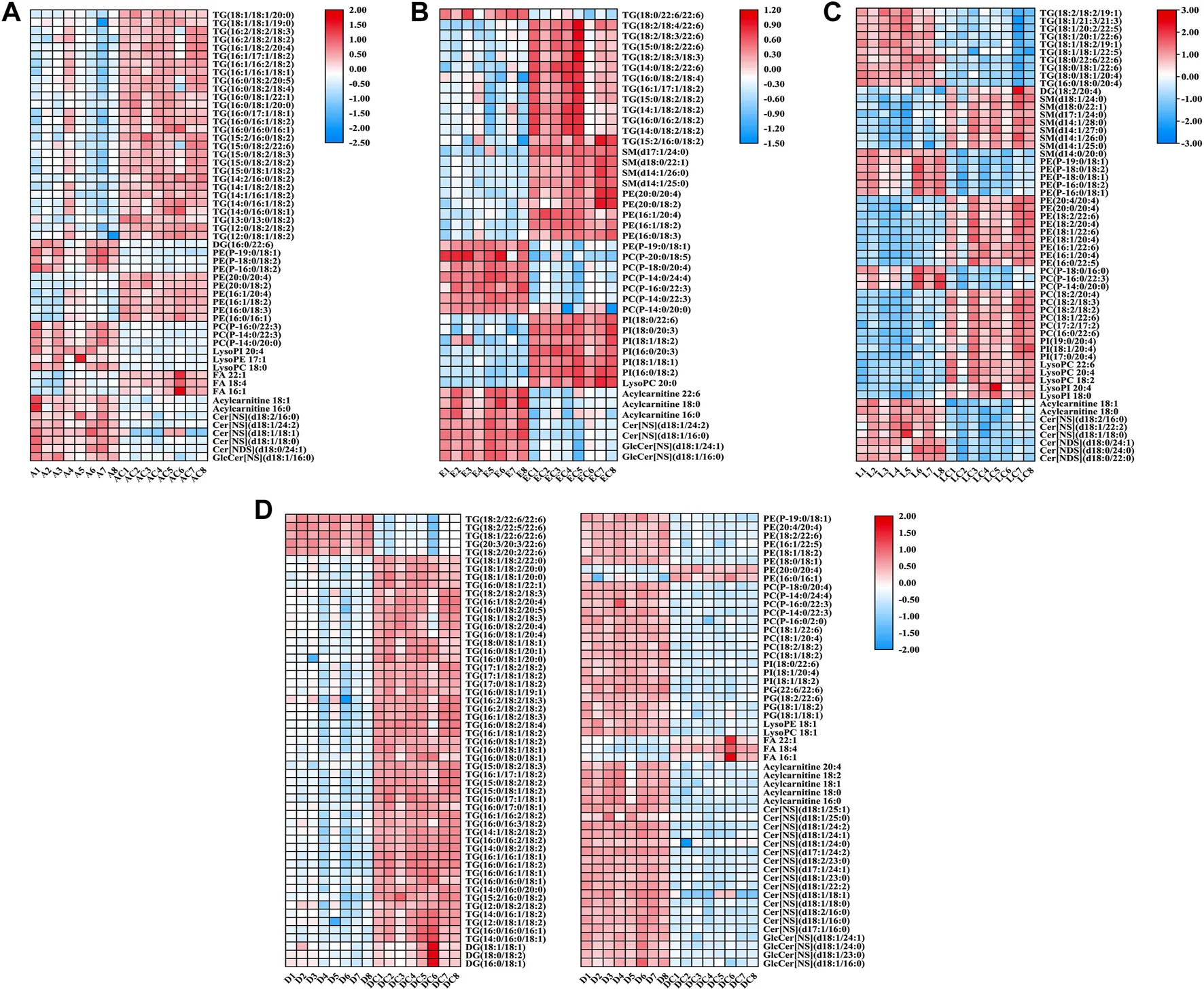
The study established four chemically induced mouse models of acute intrahepatic cholestasis using ANIT, DDC, EE, and LCA. Liver tissues were analyzed by UHPLC-Q-Exactive-MS lipidomics together with GC-MS metabolomics to compare class-level and model-specific disturbance patterns across the cholestatic injury spectrum.

Result obtained

All models showed bile-acid dysregulation, while ceramide and acylcarnitine accumulation suggested mitochondrial dysfunction across groups. The lipidomics layer also separated model-specific phenotypes: ANIT and DDC clustered more closely, whereas EE showed a distinct profile, supporting the value of toxicity mechanism lipid profiling for distinguishing superficially similar liver injury readouts.

Recommended path

Bundle A (Untargeted Lipidomics Profiling) → Bundle B (Targeted ceramide/acylcarnitine validation) → Deep pathway interpretation

Heatmap-based toxicity mechanism lipid profiling figure showing differential hepatic lipid species across chemically induced cholestasis models.
Heatmaps of altered lipid species between acute intrahepatic cholestasis models

Frequently Asked Questions

How does lipidomics facilitate the construction of Adverse Outcome Pathways (AOPs)?
AOPs require a clear, causal link between a Molecular Initiating Event (MIE) and an apical adverse outcome (like reproductive organ failure). Lipidomics acts as the crucial biochemical bridge. By precisely quantifying membrane degradation, signaling shifts, or endocrine precursor depletion, we provide the absolute, quantifiable data needed to validate these mechanistic pathways for regulatory bodies like the EPA and OECD.
What is the difference between adaptive lipid remodeling and a toxicological adverse event?
Biological systems adapt to minor stress by naturally adjusting their lipid composition (e.g., changing membrane saturation). However, a toxicological event triggers irreversible, destructive pathways. We differentiate the two by targeting specific, definitive damage markers—such as heavily oxidized polyunsaturated fatty acids or apoptotic ceramides—that are exclusively generated during actual toxicological injury.
How do you quantify low-abundance inflammatory mediators like eicosanoids in complex liver tissues?
Liver tissues contain overwhelming amounts of triacylglycerols that severely suppress mass spectrometry signals. To quantify trace eicosanoids, we mandate multi-step Solid-Phase Extraction (SPE) enrichment to meticulously strip away the background fat. Combined with highly sensitive LC-MS/MS platforms running in MRM mode, we achieve reliable absolute quantification at pg/mL levels.
Can untargeted lipidomics differentiate between the toxic mechanisms of structurally similar PFAS compounds?
Yes. While different PFAS chain lengths may cause similar phenotypic liver enlargement, their interactions with cellular receptors differ significantly. Untargeted lipidomics provides a holistic metabolic fingerprint. By applying principal component analysis (PCA) and multivariate statistics, we can identify the unique lipid cascades driven by specific PFAS analogs, highlighting subtle mechanistic differences.
How does your platform ensure the stability of oxylipins and prevent ex vivo auto-oxidation?
Oxylipins and other ROS-sensitive lipids degrade rapidly once tissue is harvested. We strictly enforce sub-second liquid nitrogen flash-freezing protocols. During homogenization and extraction, we maintain cryogenic environments and utilize solvent systems pre-loaded with antioxidant shields, ensuring the detected oxidative stress genuinely reflects in vivo toxicity.
Is spatial lipidomics (MALDI-MSI) applicable to whole-body sections of small ecotoxicology models like zebrafish?
Absolutely. MALDI-MSI is highly effective for small aquatic and mammalian models. We can section intact zebrafish, embryos, or bivalves and map the spatial distribution of specific lipids. This allows researchers to visually pinpoint exactly where a lipophilic toxicant bioaccumulates and simultaneously image the localized tissue damage occurring in that specific micro-environment.
How do you handle the data integration of lipidomics with transcriptomics for mechanistic toxicology?
Modern toxicology relies on understanding how gene expression changes ultimately manifest in the metabolome. Through advanced network toxicology algorithms, we mathematically integrate quantitative lipidomic shifts directly with your RNA-Seq data. This direct correlation highlights the specific enzymatic nodes driving the observed toxic lipid phenotype.
What is the sample volume requirement for evaluating endocrine-disrupting effects?
Thanks to the extreme sensitivity of our targeted lipidomics platforms, we require very low sample inputs. Typically, 50 microliters of serum/plasma or 10-30 milligrams of gonadal or liver tissue is completely sufficient to provide comprehensive, absolute quantification of cholesterol and its complex downstream endocrine steroid precursors.
* Our services can only be used for research purposes and Not for clinical use.

Applications:


Online Inquiry

CONTACT US

Copyright © 2026 Creative Proteomics. All rights reserved.