Precision Oncology & Ferroptosis Lipidomics

Tumors rewire lipid metabolism to survive oxidative stress, remodel membranes, and shape immune signaling in the tumor microenvironment. Our ferroptosis lipidomics workflows connect lipid peroxidation profiling to pathway-level interpretation—so you can move from discovery signals to actionable mechanistic hypotheses (RUO).

Key capabilities

  • Unbiased ferroptosis lipidomics to detect remodeling across major lipid classes and peroxidation-prone species
  • Quantitative validation (isotope dilution) for lipid peroxidation profiling and targeted mediators
  • Spatial and organelle-resolved options to study tumor microenvironment lipidomics and mitochondrial vulnerability
Request Analysis

Submit Your Request Now

×

Our services have earned the trust of companies, schools, and organizations globally, and we remain dedicated to maintaining that trust.

Boston University
University at Buffalo
UMass Medical School
Hawaii Pacific University
Medizinische Fakultät
Louisiana State University
Nyulangone
Nature's Fynd
Dietary Supplement Manufacturer
  • Trends & Challenges
  • Integrated Solutions
  • Technical Advantages
  • Case Studies
  • FAQ

Solutions For Ferroptosis Lipidomics And Tumor Microenvironment Studies

MoA work in ferroptosis is rarely linear. Most teams loop through: (1) discover lipid remodeling, (2) validate a short list of ferroptosis-relevant lipids, and (3) add deep insight (space, organelles, flux logic) to resolve mechanism. The matrix below is built around what actually triggers decisions in programs—signal quality, reproducibility, biology conflicts, and localization needs—so you can choose a path that reduces rework.

Weak or No PD Movement in Plasma

Situation:

Early PK/PD studies show minimal or inconsistent lipid movement in plasma across planned timepoints. The apparent effect is close to background variability, or directionality changes between adjacent timepoints, making it unclear whether the pathway is truly engaged or the signal is dominated by noise (diet, handling, matrix effects, or batch).

Goal:

Establish whether any lipid pathways exhibit a reproducible treatment-associated pattern and identify a shortlist of lipid classes/species that show interpretable dose/time-linked behavior suitable for follow-up validation.

Recommended Path: Bundle A → Bioinfo/Stats

Recommended Services:

What You Will Get:

  • Ranked lipid features + pathway-level fingerprints associated with perturbation
  • Dose/time-aware statistical outputs to separate weak biology from variability
  • A focused shortlist for targeted confirmation

Need a Repeatable, Minimally Invasive PD Readout

Situation:

The program requires longitudinal PD monitoring across dose escalation, formulation changes, or multiple cohorts, and needs a minimally invasive matrix (plasma/serum) that can be collected repeatedly without compromising study feasibility.

Goal:

Identify discovery-phase lipid signatures in plasma/serum and convert them into a quant-stable PD readout that can be carried into later pharmacology studies for consistent cross-group comparisons (RUO).

Recommended Path:

Bundle A → Bundle B

Recommended Services:

What You Will Get:

  • Discovery signature(s) in plasma with candidate PD markers (RUO)
  • A targeted follow-up direction to improve quant comparability
  • Interpretable class/species summaries for decision packages

Cross-Batch Reproducibility Is Failing

Situation:

Signals differ across batches, sites, shipments, or collection days—e.g., treated vs control separation is inconsistent, QC drift is suspected, or effect sizes fluctuate in ways that do not align with exposure or pharmacology. This is especially common when sample handling, anticoagulant choice, freeze–thaw, or extraction variability differs across runs.

Goal:

Reduce pre-analytical variability and implement batch-aware analysis so that biological conclusions are supported by reproducible patterns rather than artifacts, enabling a clean "continue / redesign / stop" decision.

Recommended Path: Risk-control → A/B rerun

What You Will Get:

  • Pre-analytical control plan aligned to lipid stability risks
  • Batch-aware statistical framing to diagnose artifacts vs biology
  • Reproducibility checkpoints for subsequent PK/PD studies

Membrane Remodeling Hypothesis in Lead Optimization

Situation:

Discovery data or biology suggests membrane remodeling (e.g., shifts in glycerophospholipid classes, remodeling signatures, or lipid ratios), but confidence is limited because the evidence is relative and sensitive to batch and matrix effects. Decision packages require more robust quantitation across dose/time and potentially across lead series.

Goal:

Quantitatively confirm membrane-related lipid changes with higher confidence and generate validation-ready outputs that support exposure–response interpretation and lead prioritization.

Recommended Path: Bundle B

Recommended Services:

What You Will Get:

  • Quantitative confirmation of remodeling-related lipid classes/species
  • Decision-ready summaries for dose/time comparisons
  • Interpretation support linking lipid patterns to plausible pathways

Inflammation or Immune Signaling Suspected (COX/LOX/CYP)

Situation:

Pharmacology, tolerability, or biomarker readouts suggest inflammatory signaling, immune activation, or mediator biology. Teams need to distinguish whether inflammation is a proximal mechanism driver, a downstream consequence, or a confounder affecting PD interpretation.

Goal:

Quantify bioactive mediator lipids and map them to COX/LOX/CYP pathway outputs, producing a signaling-layer PD readout that supports mechanism interpretation and safety-context framing.

Recommended Path: Bundle B (Mediators)

Recommended Services:

What You Will Get:

  • Mediator quantification with pathway grouping for interpretation
  • A signaling-layer PD readout to contextualize pharmacology/tox
  • Cross-condition comparisons suitable for lead optimization

Case Studies

Reference Publication: Xie, Y., et al. (2022). Journal of Hematology & Oncology. https://doi.org/10.1186/s13045-022-01297-1
Who Needs This: Tumor microenvironment teams studying why ferroptosis sensitivity shifts in co-culture, conditioned media, or adipocyte-rich niches in breast cancer models.

Case Study 1: Adipocyte–Tumor Crosstalk Reduces Ferroptosis-Linked Lipid Peroxidation

Method Used

The authors established a transwell adipocyte–TNBC co-culture system and induced ferroptosis with sulfasalazine (and verified with an additional inducer). Lipid peroxidation was measured using BODIPY 581/591 C11 staining (flow cytometry and microscopy), and ultrastructural changes were examined by TEM. They also performed lipidomics comparing co-cultured versus standard-cultured TNBC cells and tested fatty-acid supplementation with ACSL3 knockdown to probe mechanism.

Result Obtained

Co-culture reduced lipid peroxidation and ferroptosis-associated phenotypes, while the lipidomics comparison supported lipid metabolic remodeling consistent with altered susceptibility.

Recommended Path

A → B

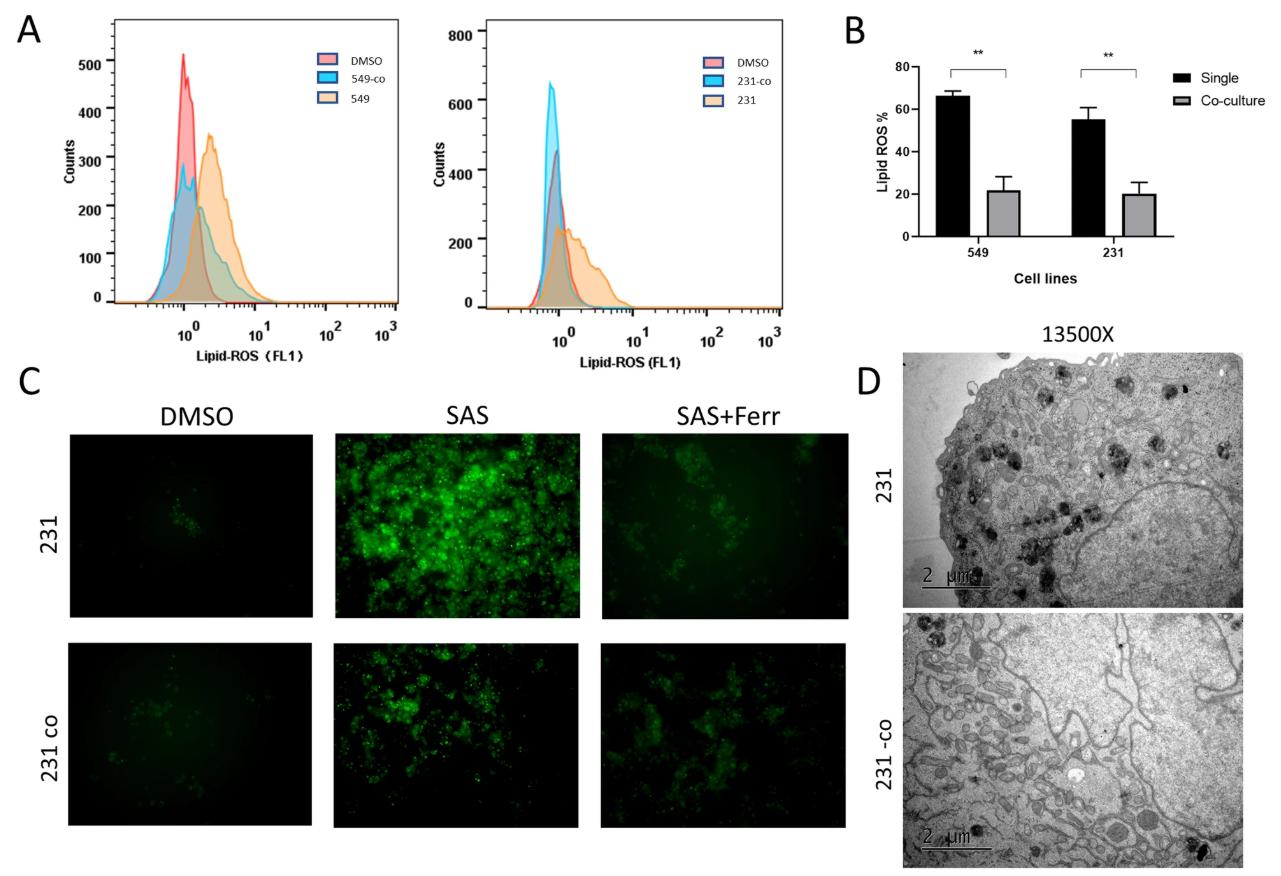
Figure 1A–D: lipid peroxidation readouts and TEM morphology supporting ferroptosis modulation in TNBC co-culture.
Adipocytes desensitize breast cancer cells to SAS-induced ferroptosis. (A–B) Assessment (A) and quantification (B) of lipid peroxidation in MDA-MB-231 and BT-549 cells ± co-culture and SAS (2 mM). (C) Fluorescence microscopy of cells treated with SAS or SAS + Fer-1 (5 μM). (D) TEM images of indicated cells after SAS treatment.
Reference Publication: Sun, C., et al. (2023). Nature Communications. https://doi.org/10.1038/s41467-023-38360-5
Who Needs This: Precision oncology teams who suspect ferroptosis pressure or lipid remodeling is spatially restricted (tumor edge vs core; interface regions; immune-dense microregions) and cannot be resolved by bulk extraction.

Case Study 2: Spatial Lipidomics Reveals Region-Specific Metabolic Remodeling in Tumor Microenvironments

Method Used

The study integrated mass spectrometry imaging–based spatial metabolomics and spatial lipidomics with microarray-based spatial transcriptomics on gastric cancer tissue sections. H&E images were used to define micro-regions and sampling spots; the authors performed clustering/UMAP-style analyses and generated region-specific metabolite/lipid MS profiles. They also visualized spatial expression patterns for representative metabolites and lipids and connected multi-omic layers to tissue architecture and cell-type context.

Result Obtained

The work mapped intratumoral heterogeneity and identified region-specific molecular signatures, including an immune-cell–dominated "tumor-normal interface" region characterized by distinct metabolic and lipid features.

Recommended Path

C

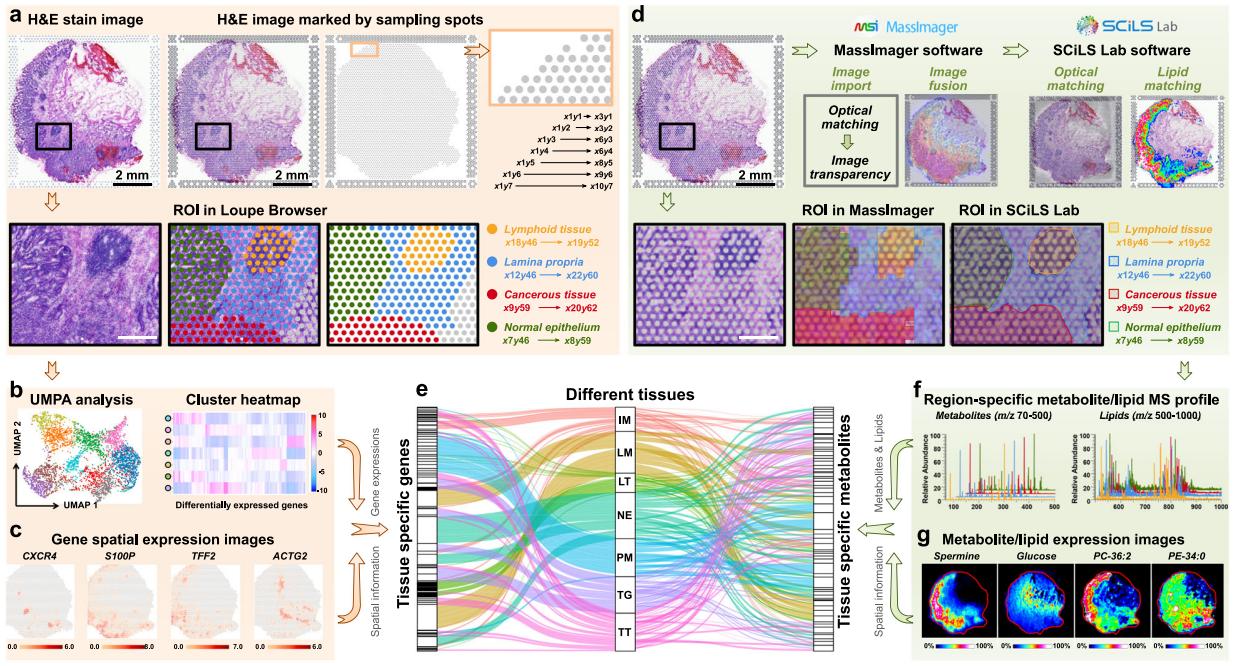
Figure 2: Spatial multi-omics workflow and analyses linking histology-defined regions to distinct molecular clusters and spatial feature distributions
The extraction of gene, lipid, and metabolite profiles in different tumor micro-regions.
Reference Publication: Phadnis, V. V., et al. (2023). Cell Reports. https://doi.org/10.1016/j.celrep.2023.113023
Who Needs This: MoA teams investigating how defined phospholipid remodeling steps (rather than generic oxidative stress markers) drive ferroptosis sensitivity in cancer cell models.

Case Study 3: Phospholipid Remodeling Links Specific Lipid Species to Ferroptosis Susceptibility

Method Used

The authors report that the Golgi scaffold protein MMD promotes ferroptosis susceptibility in ovarian and renal carcinoma cells via interactions with ACSL4 and MBOAT7. The paper describes mechanistic evidence for increased flux of arachidonic acid into phosphatidylinositol lipids, elevating AA-containing PI and related phospholipid species. The article includes a graphical abstract and highlights lipid metabolism remodeling tied to ferroptosis sensitivity, with associated publicly deposited metabolomics/lipidomics resources noted on the journal page.

Result Obtained

The study links a defined remodeling route (ACSL4–MBOAT7–associated AA-PI enrichment) to altered ferroptosis susceptibility, providing a species- and pathway-level lipid mechanism rather than a single-marker explanation.

Recommended Path

A → B

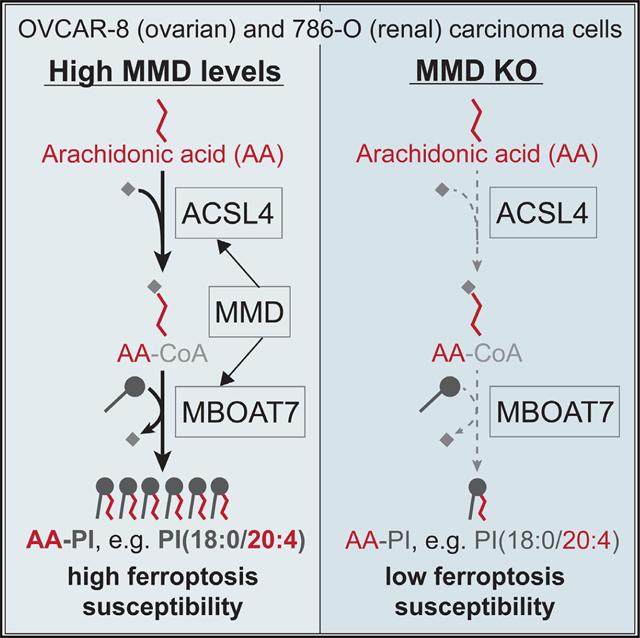
Graphical abstract illustrating MMD interaction with ACSL4 and MBOAT7 to increase AA-containing PI and ferroptosis susceptibility.
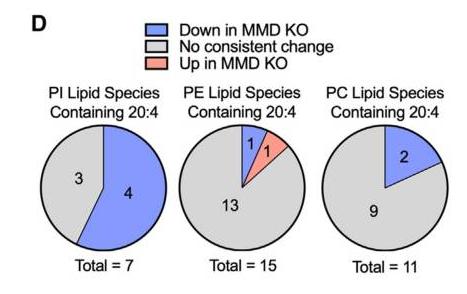
Lipidomics result highlighting AA-PI species as the main phospholipids increased by MMD.
Pie charts, by phospholipid subclass, showing proportions of lipid species containing AA that were identified in (A) (blue or red) vs. those that did not consistently change upon MMD KO in OVCAR-8 and 786-O cells (gray).

FAQ

Why use lipidomics instead of simple C11-BODIPY or 4-HNE staining?
While fluorescence dyes and 4-HNE IHC provide a binary "yes/no" for ferroptosis, they lack mechanistic granularity. Ferroptosis is driven by specific PUFA-phospholipids (e.g., PE-bound arachidonic or adrenic acid). Our lipidomics workflows identify exactly which lipid species are being depleted or oxidized, allowing you to distinguish between general oxidative stress and genuine ferroptosis. This level of detail is essential for identifying drug targets in the ACSL4-MBOAT7 axis or validating the metabolic "point of no return" in tumor cells.
How do you prevent "ex vivo" lipid peroxidation during sample handling?
Sample integrity is the greatest challenge in ferroptosis research. We implement a "Cold-Chain Stabilization" protocol, incorporating antioxidants (e.g., BHT, TPP) and rapid quenching during extraction. By using isotope dilution mass spectrometry (IDMS), we can distinguish biological lipid peroxides from artifacts generated during storage or processing. For longitudinal clinical studies, we provide specialized collection kits to ensure that the lipidomic fingerprint you measure reflects the true physiological state of the tumor microenvironment.
What are the key lipid biomarkers for ferroptosis in clinical oncology?
According to recent PAA (People Also Ask) trends, researchers focus on PUFA-eicosanoid signatures. Beyond general lipidomic shifts, the enrichment of oxygenated phosphatidylethanolamines (PE-oxPUFAs) and the depletion of plasmalogens are robust indicators. In plasma, we track the ratio of oxidized to non-oxidized polyunsaturated species and downstream oxylipins (e.g., 5-HETE, 15-HETE). These markers serve as pharmacodynamic (PD) readouts to confirm pathway engagement by GPX4 inhibitors or other ferroptosis-inducing agents (FINs).
Can spatial lipidomics resolve ferroptosis in heterogeneous tumor tissues?
Yes. Bulk analysis often masks the ferroptosis signal because only specific micro-regions (e.g., the tumor-stroma interface or necrotic core) may undergo lipid remodeling. Our High-Resolution Spatial Lipidomics (5–20 μm) maps the distribution of pro-ferroptotic lipids directly onto H&E-stained tissue architecture. This allows you to correlate lipid peroxidation clusters with specific cell populations, such as infiltrating T-cells or cancer-associated fibroblasts, revealing how the tumor microenvironment (TME) locally suppresses or promotes cell death.
* Our services can only be used for research purposes and Not for clinical use.

Applications:


Online Inquiry

CONTACT US

Copyright © 2026 Creative Proteomics. All rights reserved.